Can You Recover Compensation if the Other Driver Has No Insurance?
Yes, depending on the available coverage and responsible parties. Your own uninsured motorist coverage may apply if your policy includes it, and other sources of recovery may also exist. You may still pursue the at-fault driver directly, but collecting a judgment depends on whether that person has reachable assets or income.
Learning that the driver who caused a crash has no insurance changes the recovery process, not the underlying fault analysis. The next questions are whether uninsured motorist coverage applies, whether another person or policy covers the loss, and whether the at-fault driver has assets that a judgment might reach.
At M&Y Personal Injury Lawyers, we review both the collision evidence and the available coverage when an at-fault driver is uninsured. The claim still requires proof of fault, injury, and documented losses regardless of which insurance source responds.
Key Takeaways for California Accidents With Uninsured Drivers
- An uninsured driver’s lack of coverage does not eliminate responsibility for causing the crash. Under California’s at-fault insurance system, the person who caused the collision remains legally responsible even without a liability policy.
- California insurers must offer uninsured motorist bodily injury coverage with applicable auto liability policies, but the named insured may reject or reduce the coverage in writing under Insurance Code § 11580.2.
- A UM claim still requires proof that the uninsured driver was legally responsible and that the crash caused the claimed injuries and losses.
- A direct lawsuit against an uninsured driver is possible, but collecting a judgment depends on that person’s financial circumstances.
- Special rules apply to hit-and-run UM claims, and separate restrictions under Civil Code § 3333.4 affect injured drivers who lacked required insurance themselves.
How Does California’s Fault System Work When the Other Driver Is Uninsured?
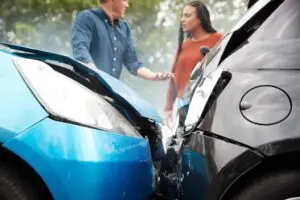
The at-fault driver remains legally responsible for the crash regardless of insurance status. California’s at-fault system means the person or entity whose negligence caused the collision bears liability for the resulting injuries and losses.
Lack of insurance creates a payment problem, not a liability problem. The investigation shifts to identifying every available source of coverage and every legally responsible party. That analysis starts with the injured person’s own policy and broadens from there.
What Does Uninsured Motorist Coverage Actually Do?
Uninsured motorist bodily injury coverage pays for injuries to insured people when an uninsured driver is at fault. The California Department of Insurance explains that UM coverage substitutes an available insurance source for the missing liability coverage.
UM coverage can provide a payment source when the policy and statutory requirements are met, but it does not bypass the liability and damages analysis. An uninsured motorist claim involves the same types of disputes that arise in any personal injury claim:
- Which driver caused the collision
- Whether the injured person shares any comparative fault
- Whether the medical condition resulted from the crash
- The amount of documented losses
- Whether the person qualifies as an insured under the policy
Each of these questions requires evidence. UM coverage addresses the missing liability insurance. It does not change how fault and damages are evaluated.
Does Every California Driver Have Uninsured Motorist Coverage?
California insurers must offer UM bodily injury coverage with applicable auto liability policies. But the named insured may reject the coverage in writing. Insurance Code § 11580.2 permits written agreements reducing or deleting UM coverage.
That means UM protection is not automatic. Check the declarations page and full policy rather than assuming the coverage exists. The limits may also differ from the liability limits depending on what the named insured selected.
How Is an Uninsured Driver Different From an Underinsured Driver?
An uninsured vehicle generally has no applicable bodily injury liability coverage. An underinsured driver has liability insurance, but the applicable limits fall below the injured person’s UIM limits. California law treats both situations under the same statutory framework but applies different coverage rules to each.
California insurance law treats several missing-coverage situations differently.
| Situation | What It Means | Coverage Question |
| Uninsured driver | No applicable bodily injury liability insurance covers the at-fault vehicle or driver | Does the injured person have applicable UM coverage? |
| Underinsured driver | Liability coverage exists but is lower than the injured person’s applicable UIM limits | Does UIM apply after applicable liability limits are exhausted? |
| Identified uninsured driver | Driver is known but lacks applicable coverage | UM bodily injury and possible property coverage need review |
| Unknown hit-and-run driver | Driver left and has not been identified | Special statutory UM requirements apply |
A driver with a $30,000 liability policy is not “uninsured” simply because the injuries exceed $30,000. That situation raises a UIM question if the injured person’s applicable UIM limits are higher, after the available liability limits are exhausted.
What if the Other Driver’s Insurer Denies Coverage?
The other driver may become “uninsured” for UM purposes even when an insurance card or policy number exists. Section 11580.2 defines an uninsured motor vehicle to include situations where an applicable insurer denies coverage or refuses to admit coverage except conditionally.
Cancelled or expired policies, excluded-driver issues, and formal coverage denials can leave the policy shown at the scene without applicable liability coverage for the crash. The UM analysis focuses on whether applicable coverage is actually in force, not simply whether a policy number was exchanged.
What Are the Special Rules for Hit-and-Run UM Claims?
For an unknown driver to qualify as uninsured under California law, the bodily injury generally must arise from physical contact between the unknown vehicle and the insured person or occupied vehicle. Section 11580.2 also requires reporting the accident to appropriate law enforcement within 24 hours and filing a sworn statement with the insurer within 30 days.
Those deadlines are specific to hit-and-run UM claims. A driver who swerves to avoid an unidentified vehicle that never makes physical contact presents a different statutory question from a vehicle that strikes the insured car and flees.
The physical-contact requirement and reporting deadlines make hit-and-run UM claims procedurally different from identified-uninsured-driver claims. Missing either deadline creates a separate risk to the claim.
How Does Proposition 213 Affect an Uninsured Injured Driver?
An injured driver who lacked required insurance faces a separate restriction on damages. California Civil Code § 3333.4, associated with Proposition 213, generally bars an uninsured owner or operator from recovering non-economic damages arising from use of a motor vehicle.
Non-economic damages include pain, suffering, inconvenience, physical impairment, and disfigurement. The restriction does not categorically erase economic losses such as supported medical expenses or lost earnings.
The statute applies to uninsured owners and operators. A passenger who neither owned nor operated the uninsured vehicle is not barred by Proposition 213 solely because the passenger personally lacked an auto insurance policy. But a passenger who owned the uninsured vehicle involved in the crash may fall within the statute’s reach.
The statute also contains an exception when the uninsured vehicle owner is injured by a driver convicted of specified DUI offenses.
Does the Two-Year Deadline Apply Differently to UM Claims?
Insurance Code § 11580.2 contains its own procedural timeline. For a UM claim to accrue, one of several actions generally must occur within two years of the accident. Those actions include filing a bodily injury lawsuit against the uninsured driver, reaching an agreement about the amount due, or formally instituting arbitration with the insurer.
Reporting the claim to an insurer does not by itself protect every UM deadline. The statutory requirements are specific, and an open claim file does not automatically substitute for the required procedural steps.
What Other Sources of Recovery May Exist Beyond UM Coverage?
The at-fault driver’s lack of a personal policy does not prove that no other coverage or responsible party exists. Depending on the actual facts, several questions may arise about other sources of recovery:
- Did someone other than the driver own the vehicle, and does the owner have applicable coverage?
- Was the driver performing work for a business when the crash occurred?
- Did another negligent driver contribute to the collision?
- Does a commercial, employer, or rideshare policy cover the vehicle or trip?
- Does the injured person qualify as an insured under another household or family policy?
None of these automatically create liability or coverage. Each requires its own factual and policy analysis. The point is that a single driver’s missing insurance does not always close every available path.
Is It Worth Suing an Uninsured Driver Directly?
An uninsured driver may still be sued for damages because lack of insurance does not erase personal liability. Winning a judgment and collecting it are different questions. Recovery depends on whether the driver has legally reachable assets, income, or other financial resources.
California DMV notes that an unsatisfied civil judgment arising from an accident may create separate driver’s-license consequences. That consequence may provide additional motivation, but it does not guarantee a collectible recovery.
A direct lawsuit against the driver is one option in the overall coverage analysis. It is not automatically the best or only option.
What Evidence Supports a UM Claim in California?
A UM claim requires evidence addressing both the collision and the resulting losses. Insurance-status evidence shows whether UM coverage may be available. Collision and medical evidence establish why compensation is owed.
A UM claim needs evidence from both sides of the analysis:
- Collision report, photographs, and witness accounts establishing how the crash occurred
- Medical records and treatment documentation connecting injuries to the collision
- Wage records and employment documentation showing financial loss
- Proof that the other driver lacked applicable insurance at the time of the crash
- The injured person’s own policy and declarations page confirming UM coverage and limits
Each record addresses a different question. The coverage records determine whether UM applies. The collision, medical, and financial records document fault, injuries, and resulting losses.
What Practical Steps Help After Learning the Other Driver Is Uninsured?
After learning the other driver is uninsured, confirm the coverage status, review your own policy, notify the appropriate insurer, and protect any UM deadlines. The focus is on identifying and preserving available coverage rather than repeating general post-crash guidance.
Steps that address the missing-coverage situation include:
- Preserve the other driver’s identifying information, vehicle description, and any insurance documents exchanged
- Confirm the liability carrier’s coverage position in writing when possible
- Review the declarations page and full policy for UM and UIM coverage
- Notify the appropriate insurer promptly and preserve the notification
- Track the specific deadlines that apply to any UM or hit-and-run claim
Acting on these steps promptly matters because hit-and-run claims have specific reporting deadlines and UM claims have their own procedural timeline. A delayed notification does not automatically eliminate coverage, but it creates additional questions.
What About Vehicle Damage When the Other Driver Is Uninsured?
Uninsured motorist property damage and UM bodily injury coverage are separate. The California Department of Insurance explains that UMPD pays for vehicle damage caused by an identified uninsured driver, subject to a current $3,500 limit.
A person with collision coverage may instead use collision benefits, which apply regardless of the other driver’s insurance status. A collision deductible waiver may also become relevant when an identified uninsured at-fault driver caused the loss.
The property-damage question is separate from the bodily injury claim. Different coverages, limits, and deductibles apply to each.
FAQs for Uninsured Driver Accidents in California
Can a passenger use uninsured motorist coverage after a crash?
Potential coverage depends on the policy and whether the passenger qualifies as an insured. California’s statutory definition covers people occupying an insured vehicle, but the actual policy language and circumstances still need review.
Can uninsured motorist coverage apply if the injured person was a pedestrian?
California’s statutory definition of an insured under an individual policy extends UM bodily injury protection beyond occupying the insured vehicle for named insureds, spouses, and qualifying resident relatives. Whether coverage applies depends on insured status and the specific policy.
Can the at-fault driver buy insurance after the accident and use it for the old crash?
No. A policy purchased after a collision does not retroactively insure an accident that occurred before the policy became effective. The coverage in force at the time of the crash controls.
What if the other driver’s insurer is still investigating whether coverage exists?
A pending coverage investigation does not establish that the driver is uninsured. Preserve the claim and obtain the carrier’s final coverage position rather than assuming either coverage or no coverage while the investigation continues.
Can MedPay help with medical bills while a UM claim is pending?
Yes, when the policy includes medical payments coverage. MedPay pays covered medical expenses for insured people regardless of fault. MedPay provides a separate, faster payment source while a UM or liability claim is still being resolved.
The Missing Policy Is Not the End of the Analysis

Finding out that the at-fault driver was uninsured is not the end of the claim. M&Y Personal Injury Lawyers reviews the collision evidence, the other driver’s coverage status, your own policy, and other potentially responsible parties to determine which recovery paths apply.
We do not assume that a missing liability policy means no recovery is possible. Several of our attorneys previously represented insurers or corporate defendants, experience that informs how we evaluate coverage disputes and identify available sources of compensation.
Consultations are free, with no obligation. We handle claims on a contingency basis and collect no fee unless we recover compensation. Our phones are answered 24 hours a day, seven days a week.
Call 866-864-5477 to talk through the coverage situation, the collision evidence, and what options may be available.