Why Are Sacramento’s Freeway Interchanges So Prone to Crashes?
Sacramento’s interchanges require drivers to merge, weave, and change lanes over short distances, often in heavy traffic. Many crashes there trace back to an unsafe lane change, following too closely, or speed that doesn’t fit the conditions.
Sacramento freeway interchange accidents tend to start the same way: two drivers want the same piece of lane at the same moment, and one of them misjudges the gap. Where US 50, Interstate 5, Business 80, and Highway 99 meet around downtown, those decisions come every few hundred feet, at freeway speed.
Afterward, each driver usually says the other one cut in, and the proof of who moved over unsafely often disappears within days. If a merge crash left you hurt, a Sacramento car accident lawyer at M&Y Personal Injury Lawyers can look at how it happened and explain where you stand.
Merge Points at a Glance
- Several of Sacramento’s most complex interchanges sit along one chain of freeways between West Sacramento and North Highlands.
- California drivers may change lanes only after signaling and only when the move can be made with reasonable safety.
- A driver entering a freeway must wait for a safe gap, but drivers who are already on the freeway are still expected to make room.
- California’s pure comparative fault rule reduces, but doesn’t eliminate, recovery for a driver who shares some blame.
- Most injury lawsuits against another driver in California must be filed within two years of the crash.
Where Are Sacramento’s Toughest Freeway Merges?
The interchanges that ask the most of drivers line up along US 50 and Business 80, the route locals call the Capital City Freeway. At each one, traffic joins, splits, or switches freeways within a short distance:
| Interchange | Location | What drivers face |
|---|---|---|
| I-80, US 50, and Business 80 | West Sacramento, in Yolo County | Traffic leaves I-80 for US 50 and the Pioneer Bridge toward downtown |
| US 50 and I-5 | East of the Pioneer Bridge, beside downtown | Connections to I-5 and Highway 99 north, with downtown exits close behind |
| US 50, Highway 99, and Business 80 | Southeast of downtown | Three routes divide: US 50 continues east, Highway 99 heads south, and Business 80 turns north |
| Business 80 and I-80 | North Highlands | Business 80 rejoins I-80, with no direct connection to I-80 west |
Between the I-5 and Highway 99 interchanges, US 50 and Business 80 share the elevated W-X Freeway, with downtown exits at 5th, 10th, 15th, and 16th streets.
Caltrans’ US 50 corridor project, which adds carpool lanes between the I-5 interchange and Watt Avenue, has also brought lane shifts and overnight ramp closures to this stretch.
Why Are Freeway Merges Hard to Drive Safely?
Merges are risky because drivers have to judge speed, distance, and timing all at once, often while reading signs for the next exit. The setups that tend to cause trouble include:
- Weaving sections, where drivers entering and leaving the freeway cross paths in the same short stretch
- Lane drops, where a lane ends and drivers who wait until the last moment force their way over
- Freeway splits that pull drivers across several lanes to reach the correct route
- Sudden slowdowns, when traffic backs up from a busy downtown exit into the through lanes
- Work zones, where temporary striping and narrowed shoulders change the usual path
Each setup leaves different evidence behind, so how a crash unfolded matters as much as where.
Who Is at Fault in a Sacramento Freeway Merge Crash?
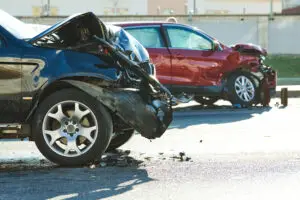
The driver who moved into another car’s path without enough room is usually the one at fault, though a driver who is already in the lane can share blame for speeding or tailgating. California measures each driver’s conduct against specific Vehicle Code rules, then divides responsibility by percentage.
The Lane-Change Rules
California’s unsafe lane change rule bars a driver from moving right or left until the move can be made with reasonable safety, and it requires a signal first. A separate rule on staying in one lane requires drivers to keep within a single lane as nearly as practical and to check that a move is safe before making it.
Speed and Following Distance
Drivers who are already on the freeway have duties of their own. The following-distance rule prohibits following more closely than is reasonable and prudent given speed and traffic. A driver who closes the gap to block a merging car may carry part of the fault.
Carpool Lane Lines
Where double solid lines separate a carpool lane from regular traffic, the carpool lane crossing rule bars drivers from crossing them to enter or leave. Darting across them to catch an exit breaks a rule written for exactly that situation.
How Shared Fault Is Divided
California follows pure comparative fault, so an injured driver’s compensation drops by their own share of blame instead of disappearing. If a jury values your losses at $100,000 and finds you 20% responsible for drifting before you signaled, you can still recover $80,000.
Chain-reaction crashes at a merge often involve several at-fault drivers. Under California’s fair-share rule, each of them can be held responsible for the full amount of economic losses, such as medical bills and lost wages, but only for their own percentage of noneconomic damages, such as pain and suffering.
What Evidence Helps After an Interchange Crash?
Proof that pins down each car’s position and timing usually settles a merge dispute. The most useful pieces include:
- Dashcam video from your vehicle or from another driver who stopped
- Photos of the lane markings, signs, and any work-zone layout, since construction setups change from week to week
- The location of damage on each car, which shows the angle of contact in a sideswipe
- Data from vehicle event data recorders, which many cars use to log speed and braking just before a collision
- Witness names and the CHP report number
Dashcam footage gets recorded over, and a work zone can be restriped before anyone photographs it.
When the Stories Don’t Match
When accounts conflict, careful analysis earns its keep. In one case our firm handled, a pedestrian was struck by a semi truck at a downtown Los Angeles intersection, and fault turned on the traffic signal sequence.
After at least 15 depositions on that question alone, an accident reconstructionist pieced together what happened and explained it to the jury in plain terms. His testimony changed the case.
Insurance and Deadlines After a Sacramento Merge Crash
Several insurance policies can come into play after an interchange collision, depending on who was involved and what coverage each driver carried:
- The at-fault driver’s liability policy, which California sets at a minimum of $30,000 per injured person and $60,000 per crash
- Your own uninsured or underinsured motorist coverage, when the other driver has no insurance or too little
- A commercial or employer policy, when the other driver was working at the time
Serious injuries can exceed a minimum policy quickly, so finding every source early matters.
Deadlines That Apply
Most lawsuits against another driver must be filed within two years under Code of Civil Procedure 335.1. A claim against a public agency over a road condition has a much shorter first step, a written car accident claim within six months. Exceptions can shorten or extend either deadline.
Sacramento Freeway Interchange Accident FAQs
Does the driver merging onto a California freeway have to yield?
A driver entering a California freeway has to wait for a gap that allows a reasonably safe merge under the Vehicle Code’s lane-change rules. The DMV driver handbook still tells drivers who are already on the freeway to make space for entering vehicles, even when they have the right-of-way, so both drivers’ choices can matter.
What if a driver cut me off at a merge and kept going without hitting me?
A driver who forces you off the road without touching your car creates a hard claim if they can’t be identified. California’s uninsured motorist law generally requires physical contact with an unidentified vehicle, a police report within 24 hours, and notice to your insurer within 30 days.
How do I get the CHP report for a crash on US 50 or Business 80?
The California Highway Patrol investigates crashes on Sacramento’s state freeways, and parties to the crash can request the report with a CHP 190 form. The form goes to the CHP Area office that handled the crash.
Which court handles a crash at the I-80 and Business 80 split in West Sacramento?
A lawsuit over a crash in West Sacramento can be filed in Yolo County Superior Court because the injury happened in Yolo County. California’s venue statute also allows filing in the county where a defendant lives, so a case against a Sacramento County resident may proceed there instead.
Should I talk to the other driver’s insurance adjuster after a merge crash?
California law doesn’t require you to give the other driver’s insurer a recorded statement, though your own policy usually requires you to cooperate with your insurer. Adjusters often contest who had the lane first.
A Second Look at the Merge That Changed Your Week

A merge crash rarely feels complicated in the moment. It gets complicated later, when the other driver’s insurer tells a version of events that doesn’t match yours.
M&Y Personal Injury Lawyers represents injured drivers on a contingency fee, and we explain the fee agreement, including how case costs are handled, before you sign anything.
Each client also gets a dedicated team and a line they can text around the clock. Call 866-864-5477 to talk through what happened at the interchange and what can still be gathered.