Which Sacramento Freeways Carry the Most Truck Traffic?
Interstate 5, Interstate 80, and Highway 99 carry most of Sacramento’s big-rig traffic. Caltrans counts show about 13,000 to 18,000 trucks a day at each route’s busiest point, with the heaviest volumes near downtown.
A Sacramento truck accident usually happens on one of three freight routes. Interstate 5 runs the length of the Central Valley, Interstate 80 links the Bay Area ports to Reno and points east, and Highway 99 carries farm and distribution traffic through Elk Grove and south Sacramento.
Those three routes meet in and around the city, so local drivers share lanes with long-haul rigs every day. Each corridor has its own traffic patterns, and those patterns shape how a truck crash happens and who may be responsible for it. If you were hurt in a collision with a big rig, a Sacramento truck accident lawyer at M&Y Personal Injury Lawyers can explain your options.
Sacramento Freight Corridors at a Glance
- I-5, I-80, and Highway 99 converge in Sacramento, making the region a major Northern California freight crossroads.
- Caltrans truck counts top 17,000 trucks a day on I-5 near downtown Sacramento.
- Big rigs with three or more axles are limited to 55 mph on California highways, even where cars may go faster.
- A trucking company is generally responsible for crashes its driver causes while working.
- For-hire carriers hauling general freight across state lines must carry at least $750,000 in liability coverage under federal rules.
How Much Truck Traffic Moves Through Sacramento?
Truck traffic through Sacramento is heavy and concentrated on a few freeway segments. Caltrans 2023 truck traffic counts show these daily averages at key points:
| Location | Total Vehicles Per Day | Trucks Per Day | Truck Share |
|---|---|---|---|
| I-5 at the San Joaquin County line | About 65,000 | About 15,800 | 24% |
| I-5 at I Street, downtown | About 185,000 | About 17,800 | 10% |
| I-5 at Airport Boulevard | About 59,000 | About 11,600 | 20% |
| I-80 at the I-5 junction | About 168,000 | About 13,400 | 8% |
| Highway 99 at Elk Grove Boulevard | About 84,000 | About 12,900 | 15% |
| Highway 99 at the San Joaquin County line | About 77,000 | About 11,600 | 15% |
| Highway 99 at the US 50 and Business 80 interchange | About 197,000 | About 18,300 | 9% |
The truck share matters as much as the raw count. Near the county lines, roughly one vehicle in every four to seven is a truck, which means passenger cars spend long stretches beside, behind, or in front of heavy rigs.
Interstate 5: From the Delta to the Airport
Interstate 5 is the main north-south freight spine of the West Coast, and in Sacramento it passes directly beside downtown. Trucks heading between Southern California, the Port of Stockton, and the Pacific Northwest all funnel through it.
The Downtown Squeeze Near I Street and US 50
Near downtown, I-5 carries its highest truck volumes alongside commuter traffic merging from US 50 and local streets. Tight interchange spacing leaves trucks little room to change lanes. When a car cuts in front of a loaded rig there, the truck driver may have no safe distance left to stop.
North Toward the Airport and Woodland
North of the I-80 junction, total traffic drops, but trucks make up a larger share of it. Higher speeds on this stretch mean that following too closely or drifting from a lane carries more force when a crash happens.
Interstate 80 and the Reno Freight Route
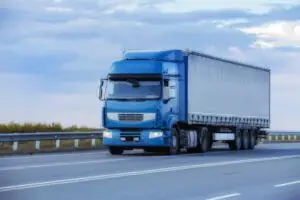
Interstate 80 carries freight between Bay Area ports and the Sierra crossing to Nevada. Through the Sacramento area, it shares space with heavy commuter traffic toward Roseville and the eastern suburbs.
The I-5 and I-80 Junction
The interchange where I-80 meets I-5 north of downtown handles more than 13,000 trucks a day on the approach. Long-haul drivers who don’t know the ramp layout can make late lane changes. Commuters add to the risk when they move into a truck’s blind spot, where the driver can’t see them.
Long Hauls Over the Sierra
I-80 is a major truck route over the Sierra Nevada between Sacramento and Reno. Federal hours-of-service rules limit property-carrying drivers to 11 hours of driving after 10 consecutive hours off duty. Logs showing a driver near or over that limit can become central evidence after a crash.
Highway 99 Through South Sacramento and Elk Grove
Highway 99 runs parallel to I-5 through the Central Valley and serves farms, food processors, and distribution centers. Through Elk Grove and south Sacramento, it mixes trucks with commuters and frequent on-ramps.
Agricultural and Distribution Traffic
Trucks serving farms, food processors, and warehouses along Highway 99 tend to make shorter trips with frequent stops. Those trips add merging and lane changes that long-haul freeway driving involves less often.
Visibility and the Basic Speed Law
Central Valley fog and nighttime glare can sharply reduce visibility on Highway 99. California’s basic speed law requires every driver, including truck drivers, to drive no faster than conditions safely allow. A trucker going the posted limit in thick fog can still be found negligent.
How Do Truck Crashes Happen on These Corridors?
Truck crashes on Sacramento’s freight routes tend to follow a handful of patterns tied to merging, stopping, and visibility. The most common include:
- Rear-end collisions when traffic slows suddenly near busy interchanges
- Lane changes into a car sitting in a truck’s blind spot
- Wide right turns by trucks leaving the freeway for surface streets and warehouses
- Jackknife crashes when a driver brakes hard on wet pavement
- Tire failures and debris that send vehicles swerving across lanes
Each pattern points toward different evidence. Mirror adjustment and signaling matter most in a blind-spot crash. In a rear-end crash, the key questions are speed, following distance, and when the driver first braked.
What Truck Rules Apply on Sacramento Freeways?
Commercial trucks follow rules that don’t apply to most passenger cars, and a violation can be strong evidence of fault after a crash. The rules that come up most often in Sacramento corridor cases include:
- California’s 55 mph truck speed limit for trucks with three or more axles and vehicles towing trailers
- Truck lane restrictions that keep big rigs in the right lane or designated truck lanes
- Federal hours-of-service limits on driving time and required rest breaks
- Inspection and maintenance requirements for brakes, tires, and lights
- Cargo securement rules that govern how loads are tied down
Several of these rules exist because a heavy truck behaves so differently from a car once it is moving.
Why Weight Changes Stopping Distance
A fully loaded tractor-trailer can weigh up to 80,000 pounds on interstate highways, many times the weight of a passenger car. All that weight means a truck needs far more distance to stop. Knowing how much a loaded semi truck weighs also explains why a rear-end collision by a big rig causes so much damage.
Who Can Be Liable for a Sacramento Truck Accident?
More than one party is often responsible for a truck crash, and identifying each one affects how much insurance is available. Possible defendants include:
- The truck driver, for speeding, following too closely, or failing to yield
- The motor carrier, which is generally responsible for a driver acting within the course and scope of employment
- The company that loaded the cargo, if a shifting or poorly secured load contributed
- A maintenance provider, if brake or tire work was done improperly
- A public agency, if a dangerous road condition played a part
Commercial trucks also carry far more insurance than passenger cars. Under 49 CFR 387.9, for-hire carriers hauling general freight across state lines must carry at least $750,000 in liability coverage, far above California’s personal auto minimum.
Filing a Sacramento Truck Accident Claim
California gives most injured people two years from the date of the crash to file a lawsuit under Code of Civil Procedure 335.1. A claim against a public agency has a much shorter first deadline. If a Caltrans road condition played a part, a written government claim must be presented within six months under Government Code section 911.2.
Where a Truck Case Can Be Heard
A trucking company based in another state can still be sued in California when its truck caused a crash here. Code of Civil Procedure 395.5 lets a lawsuit against a corporation be filed in the county where the liability arose. For a crash on I-5 in Sacramento County, that usually means Sacramento County Superior Court.
Details That Protect a Truck Claim
People hurt in a truck crash often find it useful to gather a few details in the days that follow:
- The carrier’s name and the USDOT number printed on the truck’s door
- Photos of the truck, trailer, cargo, and any skid marks, if it was safe to take them
- The CHP report number and the names of any witnesses
- Every medical record and bill, starting with the first visit
The USDOT number identifies the carrier responsible for the truck and opens its federal registration and safety records. That matters because a driver can work for one company while hauling a trailer owned by another.
Building the Local Record
Truck claims rely on records the carrier controls, including driver logs, dispatch notes, inspection reports, and engine data. An early request asks the carrier to preserve those records, so they’re still available if liability is disputed later. A Sacramento personal injury lawyer can also coordinate the medical side of the claim while the truck evidence is gathered.
What Our Attorneys Look for in a Truck Crash Case
Our attorneys look at the whole operation behind a truck, not only the driver. Truck crashes tend to be more severe than other vehicle collisions because of the size and speed of the trucks involved. In our experience, the safety violations behind them most often come down to speeding, failing to yield, and not keeping a safe following distance.
Looking Past the Driver
A trucking company can be held responsible when its driver was acting within the course and scope of the job, so we also examine the company’s own decisions about fatigue, driver qualifications, and maintenance.
Many of our attorneys used to work for insurance companies, and they know how commercial carriers and their insurers approach these claims. When a case is prepared for trial, we retain outside professionals to explain the trucking evidence to a jury.
Your Sacramento Truck Accident Questions, Answered by Our Attorneys
Can I sue an out-of-state trucking company after a crash in Sacramento?
An out-of-state trucking company whose truck causes a crash in Sacramento County can be sued in California. A carrier that operates on California highways answers to California courts for crashes that happen here. The case can usually be filed in the county where the crash occurred.
Who investigates a truck crash on I-5, I-80, or Highway 99 in Sacramento?
The California Highway Patrol investigates crashes on state freeways in the Sacramento area, including I-5, I-80, and Highway 99. The CHP’s South Sacramento Area office patrols sections of I-5 and Highway 99. CHP officers trained in commercial vehicle enforcement can also inspect a truck’s brakes, equipment, and paperwork after a serious crash.
Who pays if a truck’s cargo shifts or spills on a Sacramento freeway?
Responsibility for a cargo-related truck crash on a Sacramento freeway can fall on the driver, the motor carrier, or the company that loaded the trailer. Federal cargo securement rules set standards for how loads must be tied down, and a violation can help show which party failed to meet them.
Can a trucking company’s safety history be used in my claim?
A trucking company’s safety history, including prior inspection violations and crash records kept by federal regulators, can be relevant in a California truck accident claim. That history can help show the carrier knew about problems with a driver or its equipment and failed to fix them.
Does a truck accident claim take longer than a car accident claim?
Truck accident claims in California often take longer than car accident claims, since they involve commercial insurers, more evidence, and frequently more than one defendant. Serious injuries, which are common in truck crashes, also take longer to treat and value before a claim can be resolved.
After a Crash on a Freight Corridor

A crash with a truck on one of these corridors can leave lasting injuries and a stack of questions about insurance, fault, and next steps. Many of the answers sit in records the trucking company controls, and some of that evidence won’t last long.
If a big rig hit you on I-5, I-80, or Highway 99, M&Y Personal Injury Lawyers can review what happened and what the carrier’s records show. We handle truck cases on contingency, so you pay no attorney fee unless we recover compensation for you. Every case turns on its own facts, and our team takes calls any time at 866-864-5477.