
Why Does a Cyclist’s Road Position Matter So Much After a San Jose Crash?
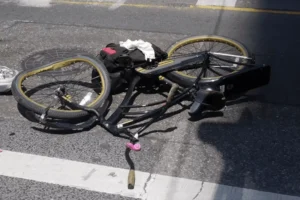 Road position matters because California’s bicycle rules change with the circumstances. Passing, hazards, narrow lanes, turns, bike-lane use, and parked vehicles trigger different rules, so the cyclist’s location has to be evaluated against the law that applied at that moment.
M&Y compares the roadway layout and crash evidence with those rules rather than starting from an assumption that the bicycle belonged at the curb.
Where Is a Cyclist Legally Allowed to Ride in California?
California Vehicle Code § 21200 gives a person riding a bicycle on a highway the same rights and duties as a vehicle driver, with exceptions for rules that by their nature do not apply to bicycles. That means a cyclist is not a guest on the road waiting for permission from motor vehicles.
The specific positioning rules depend on the riding situation. California statutes recognize that a cyclist’s correct location shifts based on speed, traffic, hazards, turns, and bike-lane conditions.
|
Bicycle Situation |
California Rule That Applies |
|
Riding slower than the surrounding traffic |
§ 21202 generally calls for riding as close to the right as practicable, subject to important safety and turning exceptions. |
|
Avoiding a hazard or narrow lane |
§ 21202 allows movement farther left when reasonably necessary to avoid unsafe conditions. |
|
Riding in an established bicycle lane |
§ 21208 generally governs bike-lane use and permits leaving the lane in specified situations. |
|
Being overtaken by a motor vehicle |
§ 21760 generally requires at least three feet of passing clearance and additional safety precautions. |
|
Riding beside parked vehicles |
§ 22517 restricts the unsafe opening of vehicle doors into moving traffic. |
An insurer’s argument that the cyclist “was not where they belonged” needs to be measured against the actual statute and the actual road conditions, not a vague assumption that bicycles belong at the curb.
Was the Cyclist Required to Ride Closer to the Curb?
Section 21202 does generally call for slower cyclists to ride near the right edge of the roadway, but the statute also permits riding farther left when reasonably necessary.
A cyclist riding farther from the curb falls within § 21202’s exceptions when that position is reasonably necessary to avoid parked vehicles, surface hazards, or a lane too narrow to share safely. M&Y establishes the road conditions at the crash site and compares the cyclist’s actual position against the statute’s requirements and exceptions.
Does a Cyclist Have to Stay Inside the Bike Lane?
Section 21208 generally requires certain cyclists who are traveling slower than traffic to use an established bike lane. The statute permits leaving the lane to pass another bicycle, vehicle, or pedestrian when necessary, to prepare for a left turn, to avoid debris or other hazardous conditions, or to approach a place where a right turn is authorized.
San Jose has extensive bicycle infrastructure, including protected facilities on corridors like 10th and 11th Streets and San Fernando Street. Riding outside a designated lane does not automatically establish rider fault. The reason and the road conditions control whether the departure was lawful.
What Happens When a Driver Turns Across a Bicycle Lane?
 A right-hook crash occurs when a vehicle overtakes or travels beside a cyclist and then turns right across the bicycle’s path. The cyclist, traveling straight in a bike lane or along the right edge, has little room to stop or avoid the turning vehicle.
Vehicle Code § 21717 addresses the procedure for crossing a bicycle lane to make a turn. Vehicle Code § 21209 limits when motorists can drive inside bicycle lanes, with exceptions for entering within the permitted distance before a turn.
The central question after a right-hook collision is when the vehicle crossed the bicycle’s travel path relative to the cyclist’s position. A driver who passes a cyclist and immediately turns right has moved through occupied or about-to-be-occupied space. Intersection layout, signal timing, turn-signal use, and video establish the sequence.
How Do Other San Jose Bicycle Crashes Create Different Fault Questions?
San Jose bicycle claims extend beyond passing and turning disputes. Left-turn collisions involve a driver crossing an oncoming cyclist’s path. Dooring crashes involve a parked-vehicle occupant opening a door into the rider’s lane, governed by Vehicle Code § 22517.
Driveway and side-street entry crashes involve a vehicle crossing the cyclist’s path from private property. Rear-end crashes involve a vehicle striking a cyclist from behind. Each configuration raises a different question about which road user entered the other’s space.
M&Y’s San Jose personal injury lawyers also handle car, truck, motorcycle, pedestrian, and other injury claims across Santa Clara County.
How Do You Prove Who Entered Whose Space?
Bicycle crash evidence works differently from car-on-car collision evidence because the dispute usually centers on a narrow band of road rather than two vehicles in clearly defined lanes. The evidence needs to answer four connected questions.
Where was the cyclist? Lane markings, bicycle-lane boundaries, roadway geometry, and video establish the cyclist’s position before the collision. Damage on the bicycle’s left or right side narrows where the rider was relative to the travel lane and parked vehicles.
How did the motor vehicle move? Vehicle damage location, turn-signal evidence, witness accounts, and available video show whether the driver was passing, turning, merging, or entering the roadway. The vehicle’s damage pattern indicates which part of the car made first contact and from what direction.
How much room existed? Roadway width, lane configuration, parked vehicles, and obstructions establish the physical space available. When a passing-clearance claim is at issue, the lane dimensions and vehicle widths help reconstruct whether three feet of clearance existed under § 21760.
What happened after contact? The cyclist’s final position, bicycle damage, debris, police observations, and injury documentation show the consequences of the collision and help connect the crash mechanics to the specific injuries.
When the driver’s account conflicts with roadway geometry, damage, or video, those inconsistencies undermine that account. M&Y compares each layer of evidence against the others to build the clearest available picture of the collision.
What if the Driver Says the Cyclist Was Riding Improperly?
 Specific allegations about cyclist conduct need specific evidence-based responses. A blanket claim that the rider was “in the wrong place” does not hold up when California law permitted the cyclist’s position under the actual road conditions.
Several common allegations arise in bicycle crash claims, and California statutes address each one directly:
- The cyclist rode outside the bike lane: § 21208 permits leaving the lane to avoid hazardous conditions, debris, or when preparing for a turn, among other specified situations
- The cyclist rode too far from the curb: § 21202 permits riding farther left when reasonably necessary for safety, including narrow lanes and parked vehicles
- The cyclist lacked nighttime lighting: Vehicle Code § 21201 sets specific lighting and reflector requirements for darkness, and compliance or noncompliance is a factual question
- The cyclist entered the intersection improperly: traffic-signal evidence, witness accounts, and video establish the sequence
Under California Civil Code § 1714, both parties’ conduct enters the responsibility analysis. California’s pure comparative negligence system allocates fault proportionally rather than barring the claim entirely when the cyclist shares some responsibility.
The practical question is whether the cyclist’s conduct actually contributed to the collision or whether the allegation is an assumption dressed up as evidence.
Do You Need a Lawyer After a San Jose Bicycle Accident?
 A bicycle claim becomes much harder to evaluate when the dispute moves past whether the car hit the bike and into where the cyclist was legally entitled to ride and how the vehicle entered that space. Those questions require matching specific California statutes against the physical evidence from the crash site.
Situations that benefit from legal preparation include serious injuries that require ongoing treatment, a close-passing or sideswipe collision, a right-hook turning crash, a dooring or no-contact evasive crash, a hit-and-run, a nighttime visibility dispute, unclear insurance coverage, or substantial future losses.
M&Y establishes the cyclist’s lawful position, documents the driver’s movement, and connects the physical evidence to the applicable California bicycle statutes.
What Does M&Y Bring to a San Jose Bicycle Claim?
M&Y builds the claim around bicycle-specific roadway rules rather than allowing the case to collapse into a vague argument that the cyclist belonged somewhere else. The firm establishes roadway geometry, cyclist positioning, passing clearance, vehicle turning or merging movement, and the damage pattern that shows how the vehicles interacted.
M&Y has recovered over $1 billion for California injury victims. Every client works directly with an attorney, and the firm also handles bicycle claims through its Los Angeles bicycle accident practice and other California offices.
You pay no attorney fees unless we recover compensation. Contact us or call 866-864-5477 for a free consultation.
A Bicycle Claim Comes Down to a Narrow Strip of Pavement
 Where the bike lane ended, how far the cyclist rode from the curb, how closely a vehicle passed, or where a driver crossed the rider’s path are the concrete details that decide a San Jose bicycle accident claim. M&Y Personal Injury Lawyers builds the claim around those details rather than assumptions about where a cyclist belonged.
Contact M&Y Personal Injury Lawyers or call 866-864-5477 for a free consultation. You pay no attorney fees unless we recover compensation. We are available 24/7.