
What Rights Do Bicyclists Have on California Roads?
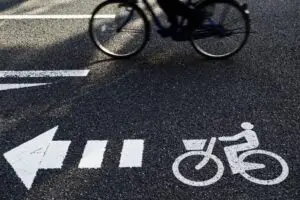 California Vehicle Code § 21200 gives a person riding a bicycle on a highway the same rights and duties that apply to a vehicle driver, except where rules inherently cannot apply to bicycles.
That means a cyclist is not automatically required to yield because a motor vehicle is larger or faster. Cyclists must also obey applicable traffic signals, signs, right-of-way rules, and roadway requirements.
The practical effect in a claim is that both the cyclist and the motorist have obligations. Fault depends on which rules applied and whether each party complied, not on a blanket assumption about who belongs on the road.
Which California Bicycle Rules Come Up After a Crash?
Bicycle fault disputes center on specific traffic rules rather than broad negligence questions. Each rule governs a different aspect of cyclist and motorist conduct, and each dispute requires different evidence.
Matching the disputed conduct to the governing rule helps identify what the investigation needs.
|
Dispute after the crash |
California rule |
Evidence that helps resolve it |
|
“The cyclist should have been farther right” |
Vehicle Code § 21202 includes several exceptions |
Lane width, parked vehicles, debris, road conditions, turn location |
|
“The cyclist left the bike lane” |
Vehicle Code § 21208 permits leaving for specified reasons |
Bike-lane condition, hazard, turn approach, photos, video |
|
“The driver passed safely” |
Vehicle Code § 21760 requires three feet and, when applicable, a lane change |
Lane width, vehicle damage, witness accounts, available video |
|
“The driver was allowed to enter the bike lane to turn” |
Vehicle Code § 21209 permits limited bike-lane entry for turns |
Merge point, turn signal, lane markings, cyclist location, video |
|
“The cyclist hit an open door” |
Vehicle Code § 22517 restricts unsafe door opening |
Door position, parked vehicle, witness accounts, surveillance |
Each rule addresses a different fault question, including where a cyclist may ride, when a driver can enter a bike lane, and how much passing clearance the law requires.
Which Bicycle Crash Scenarios Turn on Road Position and Right of Way?
 The rules above apply differently depending on the specific traffic conflict. Three crash types raise the most common bicycle-position disputes in Sacramento claims.
What Happens When a Driver Turns Right Across a Bike Lane?
Vehicle Code § 21209 generally prohibits motorists from driving in a bicycle lane but permits entry to prepare for a right turn within 200 feet of the intersection, among other limited exceptions.
That means a vehicle entering a bike lane before a right turn is not automatically violating the law. The timing, signaling, and safety of the merge matter. The cyclist’s location and direction of travel matter. Lane markings, video, witnesses, and impact location help reconstruct how the conflict developed.
What Happens When a Driver Turns Left Across a Cyclist’s Path?
A left-turning driver crosses the path of an approaching cyclist traveling in the opposite direction or proceeding straight through an intersection. The dispute centers on traffic signal timing, cyclist direction and speed, the driver’s sight distance, turn timing, and intersection layout.
The motorist side of a bicycle collision still involves ordinary driving rules governing turns, lane changes, signaling, and right of way. A Sacramento car accident lawyer from our firm handles those broader driver-conduct issues when the claim extends beyond bicycle-specific rules.
What Happens When a Driver Opens a Door Into a Cyclist’s Path?
California Vehicle Code § 22517 prohibits opening a vehicle door on the side available to moving traffic unless it is reasonably safe and does not interfere with traffic. Dooring collisions create a direct conflict between the parked vehicle’s occupant and the cyclist’s travel path.
The investigation examines how the door opened, the cyclist’s position and speed, the parked vehicle’s location, timing, and the available space for evasion. Vehicle Code § 21202 expressly permits cyclists to move away from the far-right edge to avoid parked vehicles, so riding near the edge of the door zone is not by itself proof of cyclist negligence.
How Do Right-of-Way Rules Apply to Cyclists at Intersections?
 Cyclists riding on the roadway generally follow vehicle traffic and right-of-way rules under Vehicle Code § 21200. The California DMV likewise instructs cyclists to obey traffic signs, signals, and basic right-of-way requirements.
The rules change when a rider stops and crosses on foot rather than riding through under vehicle rules. DMV guidance recognizes that cyclists may stop and use a crosswalk as pedestrians. In that situation, California right-of-way rules govern the pedestrian crossing duties and protections that apply.
If the injured person had stopped riding and was crossing on foot when the collision occurred, a Sacramento pedestrian accident lawyer from our team addresses the pedestrian-specific duties that apply.
Why Does Sacramento’s Bike-Lane Design Matter to a Claim?
Sacramento’s bicycle network includes conventional bike lanes, buffered lanes, shared facilities, and Class IV separated bikeways. The city’s Central City Mobility Project includes protected bikeways on streets such as 9th, 10th, 19th, 21st, P, and Q Streets. The Broadway project includes buffered bicycle lanes and redesigned crossings.
Different facility designs change where the cyclist is expected to travel, where motorists merge before turns, and how parked vehicles affect visibility. A conventional bike lane on a busy street creates different conflict points than a separated bikeway with a physical barrier.
Sacramento adopted its Streets for People Active Transportation Plan in December 2025, continuing development of the citywide walking and bicycling network. Photographs and video preserving the exact road configuration on the date of the crash help establish where each party was expected to travel and where the conflict occurred.
What Evidence Shows Where the Cyclist and Driver Were Before Impact?
Road-position evidence connects California bicycle rules to the actual facts of the crash. Each type of evidence addresses a different part of the positioning question.
Bike-lane markings, vehicle impact location, bicycle damage, roadway debris, and photographs all help reconstruct where the cyclist was traveling. Surveillance or dash-camera video, when available, adds a real-time record of vehicle and cyclist movement.
In a dooring crash, the parked vehicle’s door position, parking configuration, and the cyclist’s lane of travel become critical. Witness descriptions and traffic signals help establish timing at intersections.
Sacramento Police collision-reporting procedures specifically address bicycle collisions within city limits. When CHP investigates a collision on a state highway, its crash report documents the agency’s investigation. Neither report conclusively establishes civil fault, but both record the investigating officer’s observations and the parties’ accounts.
Does a Cyclist’s Own Conduct Affect the Claim?
 Fault disputes in bicycle claims focus on whether the cyclist obeyed a signal, rode with traffic, left the bike lane safely, used required lighting at night, or otherwise complied with an applicable bicycle rule. California applies pure comparative fault under Li v. Yellow Cab Co. (1975) 13 Cal.3d 804, meaning cyclist negligence reduces rather than eliminates recovery.
Vehicle Code § 21212 requires conventional bicycle helmets for riders under 18 on streets, bikeways, and public bicycle paths or trails. California does not impose a statewide helmet requirement on every adult conventional-bicycle rider.
Helmet use also does not determine who caused a vehicle to turn, pass, or open a door unsafely. If helmet use becomes relevant to a specific head-injury causation argument, that is a separate analysis from the question of collision fault.
When Do Bicycle-Specific Disputes Make Legal Help More Important?
Bicycle claims become harder to evaluate when the dispute depends on a bike-specific traffic rule or evidence the injured cyclist does not control. A Sacramento bike accident lawyer becomes especially useful in these situations:
- The driver or adjuster argues the cyclist had no right to ride outside the bike lane or away from the curb
- A right-turn merge or bike-lane entry is disputed
- The collision involved unsafe passing or dooring
- A hit-and-run vehicle left before information was exchanged
- Surveillance or other third-party video may exist but needs timely identification
- Significant injuries create documented future medical or lost-income questions
Several of these disputes depend on third-party records or evidence the cyclist does not control. A Sacramento cyclist injury lawyer evaluates the applicable bicycle rule, the available evidence, and the motorist’s conduct to determine how responsibility is allocated.
A bicycle accident attorney in Sacramento at our firm reviews these questions at no cost. Call 866-864-5477.
How Do We Approach Disputed Bicycle Claims?
Disputes over lane position, bike-lane exits, passing clearance, medical causation, and damages require careful factual and legal analysis. Several of our attorneys previously represented insurers and corporate defendants. That defense-side perspective informs how our California bicycle accident attorneys evaluate disputes over cyclist position, visibility, medical causation, and damages.
One attorney manages each accepted case from the first call through resolution, keeping the roadway evidence, medical documentation, and bicycle-law analysis connected throughout. We prepare every case with litigation in mind from the beginning. Our team of more than 100 employees, including 11 attorneys with over 100 years of combined experience, supports that work under the continued leadership of Co-Founder and Managing Partner Nick T. Movagar.
The Road Position Tells You Where the Conflict Happened
 The bike lane, traffic lane, or door zone identifies where the collision occurred. California bicycle rules and the physical evidence determine how responsibility is evaluated.
We investigate Sacramento bicycle accident claims on contingency, with no attorney fee unless we recover compensation. The first consultation is free with no obligation.
Call 866-864-5477 any time, 24 hours a day, seven days a week.