M&Y Personal Injury Lawyers Helps Secure Record $198.1 Million Verdict in Tragic California Crash Case

Free Consultation, Talk to a Real Lawyer Now.

Paralysis Compensation

Paralysis changes far more than the bills already received. Paralysis compensation accounts for medically supported future care, equipment, assistance, accessibility needs, lost earning capacity, and non-economic harm caused by the injury. Those needs often become clearer as rehabilitation shows what function has returned and what limitations remain.

For an injured person and family, the challenge is documenting that future picture rather than valuing the case from current expenses alone. M&Y Personal Injury Lawyers builds Los Angeles paralysis claims around medical recommendations, functional limitations, future-care needs, and work-related effects. Call 866-864-5477 for a free consultation.

Table of Contents

What Does Paralysis Compensation Need to Account For?
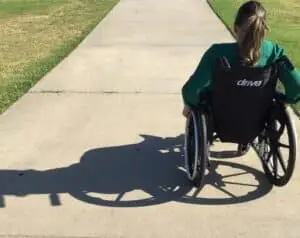
Girl on a wheel chairThe compensation analysis in a paralysis case extends well beyond hospital bills and lost paychecks. A spinal cord injury changes how a person lives, works, moves through their home, and manages basic personal care. Each of those changes carries financial consequences that the claim needs to document.

Paralysis creates costs across several parts of daily life, and each one requires its own supporting documentation.

Life Area

What the Claim Needs to Account For

Medical care

Treatment, rehabilitation, medications, and medically supported future care

Daily assistance

Help with personal care, transfers, household tasks, or other documented needs

Mobility

Wheelchairs, replacement equipment, assistive technology, and related needs

Home and transportation

Accessibility modifications and transportation changes supported by functional limitations

Work

Past lost income and reduced future earning ability

Daily life

Pain, physical impairment, loss of independence, and other non-economic effects

These are not separate legal categories. They are parts of the same person’s life, and the claim connects them through medical records, rehabilitation evaluations, and documented functional limitations.

How Do Ongoing Medical Needs Factor Into the Claim?

Spinal cord injuries require continuing medical attention that extends far beyond the initial hospitalization and surgery. Follow-up care, rehabilitation, medications, treatment of SCI-related complications, and potential future procedures all become part of the compensation picture when medical evidence supports them.

The National Institute of Neurological Disorders and Stroke notes that spinal cord injuries affect not only movement but also bladder and bowel function, breathing, pain, and other body systems. Each of those effects generates its own treatment needs and its own costs over time.

What About Daily Assistance and Personal Care?

Depending on the level and completeness of the injury, a person with paralysis may need help with transfers, dressing, bathing, meal preparation, bowel and bladder routines, mobility, and other daily tasks. Some people need assistance for specific activities while managing others independently. Others need more comprehensive support.

The personal injury claim documents the actual level of assistance the person requires, based on rehabilitation assessments and the treating provider’s recommendations, rather than applying a generic care formula to the diagnosis.

Why Do Two People With Paralysis Have Very Different Financial Needs?

Spinal cord injuries produce a wide range of functional outcomes. NINDS explains that higher spinal cord injuries generally affect more of the body, while complete injuries (where nerve communication below the injury site is entirely interrupted) differ significantly from incomplete injuries (where some nerve function remains).

A person with a complete cervical injury that affects all four limbs has different care, equipment, and assistance needs than a person with an incomplete lumbar injury who retains substantial leg function. Both have paralysis, and both have serious claims, but the financial projections look very different because the functional effects are different. 

An insurer evaluating a paralysis claim based on the diagnosis label alone misses the actual functional picture. A claim built around documented limitations, current assistance needs, rehabilitation progress, and medical projections reflects the real consequences far more accurately than one organized around a diagnostic category.

What if Doctors Do Not Yet Know How Much Function Will Return?

A spinal cord injury’s long-term functional picture is not always clear in the weeks or months after the accident. Outcomes vary considerably, and some people with incomplete injuries retain or regain substantial function over time.

That medical uncertainty creates a specific problem for the compensation analysis. Future care costs, equipment needs, and earning-capacity projections all depend on what the person’s functional abilities look like going forward.

Settling a claim before the medical team has a reasonable basis for projecting long-term function risks locking in a number that does not reflect the actual future. The claim needs medical support for the care, equipment, assistance, and functional limitations that treating providers expect based on the developing prognosis. 

When that picture is still forming, the timing of any resolution becomes part of the strategy rather than an afterthought.

How Are Future Care Needs Calculated in a Paralysis Claim?

Future-care analysis starts with what the person’s medical team has already recommended and documented. Rehabilitation records show current limitations and therapy goals.

Equipment evaluations document what the person uses and what replacements or upgrades the medical evidence supports. Treating providers address expected complications, ongoing treatment, and whether current needs are likely to continue.

In serious paralysis claims, a life care plan organizes those projected needs and their associated costs into a structured document. A life care plan draws from medical records, provider recommendations, rehabilitation assessments, equipment specifications, and accessibility evaluations to project what the injured person is reasonably expected to need going forward.

Not every paralysis case uses a formal life care plan. The approach depends on the severity of the injury, the complexity of the future needs, and whether the medical evidence supports the projections being made. The underlying principle stays the same regardless of format: future losses need a medical and factual foundation, not a guess based on the diagnosis.

What if Family Members Are Providing the Care Right Now?

Many families step into caregiving roles immediately after a spinal cord injury. A spouse helps with transfers. A parent drives to every appointment. An adult child rearranges work to provide daily assistance. No invoice arrives for any of it.

That unpaid care hides the true level of assistance the injured person requires. The claim addresses this by documenting what tasks family members perform, how many hours the care involves, and whether medical providers have documented the need for that level of assistance.

Several practical questions shape how family caregiving enters the compensation analysis:

  • What specific tasks are family members performing each day?
  • How many hours does the assistance require?
  • Have treating providers documented the need for that level of care?
  • Is the current family-provided care expected to continue, or is professional assistance likely to be needed later?

Answering those questions with documented evidence turns invisible caregiving into a concrete part of the claim rather than an assumed cost the insurer never sees.

What if I Am Able to Work but Cannot Return to My Previous Job?

Lost wages from time already missed represent only part of the employment picture after paralysis. The harder question is what happens to earning ability going forward when the injury prevents a return to the same occupation, limits work hours, eliminates physical job functions, or changes career trajectory.

A construction worker with paraplegia who returns to a desk job at lower pay has both current lost income and a reduced future earning capacity. An office worker with incomplete paralysis who returns to the same employer but works fewer hours faces a different kind of earning loss.

For someone early in their career, evidence that the injury eliminated realistic opportunities for advancement supports a future earning capacity claim. Vocational and economic evidence helps calculate those losses by comparing the person’s pre-injury earning path against what the injury now allows. Employment records, education, training, work history, and labor-market data all feed into that analysis.

How Does M&Y Document the Future Effects of Paralysis?

M&Y builds the compensation analysis from the person’s actual functional needs rather than treating paralysis as a single line item with an assumed dollar value. The process follows the medical timeline as it develops.

The firm starts by reviewing rehabilitation records, current medical treatment, and the functional assessments performed by the medical team. Those records establish what the person’s daily life looks like now: what tasks require assistance, what equipment is in use, what limitations affect work and mobility, and what the treating providers expect going forward.

From there, M&Y works with the medical, vocational, and financial evidence to project future needs that the current records support. Equipment replacement, continuing medical care, assistance levels, accessibility requirements, and earning-capacity changes all become part of the documented claim.

M&Y’s Los Angeles spinal cord injury lawyers also address the underlying liability, medical, and insurance issues that accompany serious spinal trauma beyond the compensation analysis.

How Does Compensation Address Losses That Do Not Come With a Bill?

Paralysis changes more than finances. California Civil Code § 3333 provides the general rule that tort damages compensate for detriment proximately caused by the wrongful act. That includes non-economic harm that has no invoice attached to it.

For a person living with paralysis, those losses are tied to function and autonomy. The inability to walk through a home without assistance, pick up a child, drive independently, or participate in activities that were part of ordinary life before the injury creates real harm that the law recognizes.

Spinal cord injuries affect chronic pain, mobility, bladder and bowel function, breathing, and sexual function. Each of those effects changes daily experience in ways that medical bills do not capture.

The compensation analysis documents those changes through medical records, the person’s own account, family observations, and the functional assessments performed during rehabilitation.

Why Is a Paralysis Claim Difficult to Value Without Legal Help?

The hardest part of a paralysis claim is not documenting what has already been spent. Hospital bills, surgical costs, and rehabilitation charges are recorded and totaled.

The difficulty is identifying needs that have not happened yet and connecting them to reliable medical, vocational, and financial evidence. Consider what a person with a recent spinal cord injury knows today versus what is still developing:

Known today: Current medical bills, equipment in use, wages already missed, immediate rehabilitation costs.

Still developing: Future medical complications, replacement equipment over a lifetime, evolving assistance needs, long-term earning capacity, accessibility requirements as living situations change, whether functional improvement continues or plateaus.

An early claim evaluation based mainly on current expenses misses needs that are still developing. M&Y identifies and documents the developing needs alongside the current losses so the compensation analysis reflects the injury’s actual trajectory.

FAQs for Paralysis Compensation Claims

Is There an Average Paralysis Settlement Amount?

No reliable average applies to individual paralysis claims. The compensation analysis depends on the person’s specific functional limitations, future medical and assistance needs, earning-capacity loss, liability evidence, and available sources of recovery. Published “average” figures from other sources combine very different injuries and outcomes into numbers that do not predict any particular personal injury case.


Yes, when medical and rehabilitation evidence supports the need. A wheelchair purchased today does not represent the only equipment expense the person faces.

Equipment wears out, needs repair, and sometimes needs replacement as the person’s medical or functional situation changes. The compensation analysis accounts for those projected needs using documented equipment specifications and replacement schedules supported by the evidence.


Yes. An incomplete spinal cord injury that leaves a person with reduced but not absent function still changes daily life, work ability, and medical needs. The claim evaluates actual functional loss rather than requiring a complete absence of movement or sensation. 

Someone who walks with difficulty, uses assistive devices, or has lost fine motor control has documented losses that the compensation analysis addresses.


Returning to work does not automatically mean earning capacity is unaffected. A person who returns to a different job at lower pay, works reduced hours, or loses access to career advancement because of physical limitations has a measurable reduction in future earning ability. Vocational and economic evidence compares the pre-injury earning trajectory against the post-injury reality.


California Code of Civil Procedure § 335.1 generally gives an injured person two years to file a personal injury lawsuit. The specific deadline depends on the circumstances, including the parties involved and whether a government entity bears any responsibility. Beginning the legal process early helps preserve medical and financial evidence while the future-care picture is still developing.


What M&Y Wants to Understand About Your Current Needs

Premises liability lawyerAn initial conversation about a paralysis compensation claim starts with the practical reality of the injury right now. M&Y wants to understand what movement or function has changed, what rehabilitation is underway, what assistance the person currently requires, what equipment is in use, whether a return to work has been possible, and what future care the medical team has discussed.

That information forms the starting point for building the compensation analysis around documented needs rather than assumptions. M&Y Personal Injury Lawyers has recovered over $1 billion for California injury victims. You pay no attorney fees unless we recover compensation.

Contact M&Y Personal Injury Lawyers or call 866-864-5477 for a free consultation.

Los Angeles Office Location

Visit our headquarters in LA to get the assistance you need, our law firm is located at 6300 Wilshire Blvd Suite 807, Los Angeles, CA 90048.

SEARCH OUR SITE

OUR OFFICES

Los Angeles - Main Office

6300 Wilshire Blvd. Suite 807
Los Angeles, CA 90048
Los Angeles Law Office Map

6300 Wilshire Blvd. Suite 807
Los Angeles, CA 90048
Los Angeles Law Office Map

402 W. Broadway #400
San Diego, CA 92101

Call: (619) 404-2797

2400 E Katella #800
Anaheim, CA 92806

Call: (714) 386-7623

8050 N. Palm Ave. #300
Fresno, CA 93711

Call: (559) 853-4863

6360 Van Nuys Blvd. #219
Van Nuys, CA 91401

Call: (213) 296-1243

11801 Pierce Street #200
Riverside, CA 92505

Call: (951) 234-5468

99 S Almaden Blvd #600
San Jose, CA 95113

Call: (408) 617-8928

111 West Ocean Blvd. #400
Long Beach, CA 90802

Call: (562) 354-8219

473 E. Carnegie Drive #200
San Bernardino, CA 92408

Call: (818) 650-3861

Free Case Review 24/7 (877) 650-3044 Call Now