How Is a Fleet Crash Different From an Ordinary Car Accident?
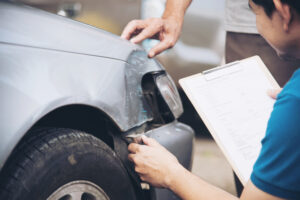 An ordinary car accident claim centers on the drivers, the vehicles, witness accounts, and insurance. A Los Angeles car accident lawyer investigates the collision itself: what each driver did, what the physical evidence shows, and what insurance covers the loss.
A fleet collision adds a parallel investigation into the company behind the vehicle. That investigation asks why the vehicle was on the road, who assigned it, whether the driver was performing company work, who maintained the vehicle, and what commercial coverage applies.
The police report documents the crash. Company records document the purpose of the trip, the vehicle assignment, and the business decisions that placed the driver at that location. Both sets of evidence matter, and they answer different questions.
What Counts as a Commercial Fleet Vehicle?
A commercial fleet generally consists of vehicles a business owns, leases, manages, or uses for its operations. Fleet vehicles do not need to be semi-trucks or heavy commercial equipment.
Common examples include delivery vans, service vans and pickups, company passenger cars, sales vehicles, courier vehicles, utility trucks, and light commercial vehicles. A plumber’s van, a pest-control truck, a catering company’s delivery car, and a corporate sales sedan all qualify.
The defining feature is the business connection, not vehicle size. That connection changes the liability analysis, the evidence available, and the insurance picture.
What Fleet Records Exist That Ordinary Car Accidents Do Not Produce?
 A fleet collision can create a second trail of company records that a privately owned vehicle claim does not produce. Each record addresses a specific factual question about the trip, the vehicle, and the business relationship.
Different fleet records answer different questions about the trip, vehicle, and business relationship. Matching the record to the disputed issue keeps the investigation focused.
|
Question in dispute |
Fleet record that addresses it |
What the record documents |
|
Was the driver working? |
Dispatch records, schedule, assignment logs, trip communications |
Purpose and timing of the trip |
|
Where was the vehicle going? |
GPS or telematics data when available, route records |
Vehicle location and travel sequence |
|
Who was assigned the vehicle? |
Driver-assignment and checkout records |
Connection between the driver and fleet vehicle |
|
Was a mechanical problem reported? |
Maintenance history, repair orders, inspection records |
Prior service, complaints, and completed repairs |
|
Did the company authorize the driver? |
Vehicle-use policies and assignment records |
Permission and control over vehicle use |
|
What insurance covered the vehicle? |
Commercial auto policies and coverage documents |
Available coverage and applicable policy terms |
Not every fleet maintains every one of these records. The investigation identifies what the company kept and what those records establish about the specific trip and vehicle.
Why Does GPS or Telematics Evidence Matter?
Some fleet systems record vehicle location, travel routes, timing, and stops. When available, this data documents where the vehicle was and when it was there, independent of what the driver or company later says about the trip.
That independence matters when the driver’s account and the company’s account conflict. The data either supports or contradicts each version.
How Are Fleet Maintenance Records Used?
Maintenance records document the vehicle’s service history: scheduled inspections, reported mechanical problems, completed repairs, and outstanding work orders. If a brake failure, tire blowout, or steering problem contributed to the crash, maintenance records show prior service, reported problems, repairs, and unresolved work that bear on whether the company had notice.
These records come from the company’s own files, not from the collision investigation. Obtaining them requires knowing what to request and when to request it.
Does the Company’s Fleet Management Create Separate Liability?
Company liability does not always depend on the driver’s employment status. A separate question is whether the company itself acted negligently in managing the vehicle or selecting the driver.
California recognizes negligent entrustment claims. CACI No. 724 requires proof that the driver negligently operated the vehicle, the defendant owned or controlled it, knew or should have known the driver was unfit, permitted the driver to use it, and the driver’s unfitness substantially contributed to the harm.
Fleet-specific questions that arise in these claims include:
- Whether the business knew of facts showing the driver was unfit to operate the vehicle
- Who authorized the driver to use the fleet vehicle
- Whether the vehicle had a reported mechanical problem before the crash
- Who was responsible for completing repairs
- Whether the company followed its own vehicle-assignment and inspection procedures
These questions examine the company’s own decisions rather than just the driver’s conduct on the road. The answers come from internal company records, not from the collision report.
Does Commercial Fleet Insurance Always Mean More Coverage?
 A commercial fleet policy does not automatically provide more extensive coverage than a personal auto policy. The California DMV lists baseline minimum liability requirements of $30,000 for one person’s injury or death, $60,000 for injury or death to multiple people, and $15,000 for property damage. Those minimums apply to private passenger, commercial, and fleet vehicles alike.
Federal, state, or local rules impose additional insurance requirements on certain types of commercial operations. But a delivery van or service vehicle operating as part of a local fleet does not necessarily carry a large commercial policy simply because it belongs to a business.
Fleet claims require identifying the actual policies in place, the insured entities, vehicle ownership, and any applicable regulatory coverage requirements. Assuming how much insurance is available based on the company name on the vehicle leads to inaccurate expectations.
When Does a Fleet Accident Become Hard to Handle Without a Lawyer?
 A fleet injury claim involves evidence, liability questions, and insurance issues that go beyond a standard car-insurance negotiation. Certain situations make the gap between the two especially wide.
An insurer may propose a settlement based on the driver’s personal policy while a separate commercial policy also covers the vehicle. The company may dispute that the driver was working, even though dispatch records or GPS data suggest otherwise. The vehicle may be owned by one entity, operated by another, and maintained by a third.
Several M&Y attorneys previously represented insurance carriers and corporate defendants. That background is directly relevant to fleet claims because these cases involve corporate records, commercial coverage questions, and the kind of liability defenses that insurers and businesses raise when a company vehicle is involved.
Call 866-864-5477 to discuss whether legal representation makes sense for your situation.
How Does M&Y Investigate a Commercial Fleet Vehicle Accident?
M&Y treats a fleet claim as two parallel investigations.
What Does the Road-Level Investigation Cover?
The first track examines the crash itself: the collision report, witness accounts, vehicle damage, photographs, available video, and the claimant’s medical documentation. This evidence establishes what happened on the road.
For a fleet vehicle accident on I-10, I-405, or US-101, the California Highway Patrol typically handles the collision investigation. For crashes on city streets, the law enforcement agency with jurisdiction generates the report.
What Does the Company-Level Investigation Cover?
The second track examines the company side: the driver’s assignment, the purpose of the trip, dispatch or route records, the vehicle’s maintenance history, the business relationship, and the applicable insurance.
Because several M&Y attorneys previously represented insurers and corporate defendants, the firm approaches fleet claims with direct knowledge of how defense teams evaluate company records, coverage, liability, and damages. One attorney manages each case from the first call through resolution, so the same lawyer reviews both the collision evidence and the company-side records.
Our California injury attorneys work within a firm founded in 2013 and still led by Co-Founder and Managing Partner Nick T. Movagar. M&Y now has more than 100 employees, including 11 attorneys with over 100 years of combined experience. Every case is prepared with litigation in mind from the beginning.
The Collision Report Tells Part of the Story
 A police report documents the crash. It rarely answers every question about why a company vehicle was at that location, who assigned it, what business purpose it served, or what fleet records exist.
M&Y Personal Injury Lawyers investigates both the collision and the company behind the vehicle. The firm handles commercial fleet vehicle accident claims on contingency, with no attorney fee unless M&Y recovers compensation. The first consultation is free, with no obligation.
Call 866-864-5477 any time, 24 hours a day, seven days a week.
What Our Clients Say About Us – Client Review
https://goo.gl/maps/hiKpNX8D5Gkh4KZ58
Read more of our reviews here.