
What Is a Bicycle Door-Zone Accident?
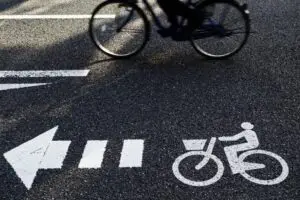 A door-zone accident occurs when someone inside a parked or stopped vehicle opens a door into an approaching cyclist’s path. “Door zone” describes the area beside a vehicle where an opening door might interfere with bicycle traffic. California law does not assign it a fixed measurement.
What Does a Direct Door Impact Look Like?
In a direct impact, the bicycle or rider strikes the open door. Damage to the door edge and bicycle components helps show where contact occurred and how the bicycle approached the vehicle.
What Happens When the Cyclist Avoids the Door but Crashes Anyway?
A cyclist who sees the door opening may brake, fall, swerve into traffic, or strike another object without ever touching the door. In those bicycle accident cases, the central issue is causation: whether the door opening forced the evasive movement that led to the crash.
What Can Show How the Door Opened and What Happened Next?
 A dooring claim is reconstructed from where the vehicle was parked, when the door entered the cyclist’s path, and how the bicycle and rider moved afterward.
Damage to the door and bicycle is one part of that reconstruction. Scuffs, dents, or scrapes help identify the contact area, while damage to the handlebars, wheel, fork, or frame is compared with the vehicle’s parking position and the cyclist’s line of travel.
Useful evidence in a dooring investigation includes:
- The parked vehicle’s position relative to the curb, bike lane, and travel lane
- Which door opened and who occupied that seat
- Damage patterns on the door and bicycle components
- Nearby business, residential, traffic, or dashcam footage when available
- Witness accounts from people who saw the door open or the cyclist react
- Evidence of any secondary collision with another vehicle, curb, or object
- Police documentation of vehicle positions and occupant statements
M&Y compares the physical marks, roadway layout, vehicle position, witness accounts, and available video to determine whether the pieces support the same account.
How Does Damage to the Door and Bicycle Help Reconstruct the Crash?
The location and angle of marks on the door and bicycle help narrow the possible positions and movements at impact. In a direct collision, those marks are compared with video and roadway geometry. In a no-contact crash, final positions, witness accounts, and the rider’s path become more important because there is no door-to-bicycle damage to examine.
What if the Other Side Says the Cyclist Should Have Avoided the Door?
The argument usually sounds like this: the cyclist was riding too fast, too close, or not paying enough attention. That characterization treats the cyclist’s reaction as the problem rather than examining the conduct of the person who opened the door.
California Civil Code § 1714 accounts for both parties’ conduct when allocating responsibility. The injured cyclist’s own actions enter the analysis only to the extent the evidence supports assigning a share of responsibility.
Common allegations and the evidence that addresses them include:
- The cyclist was riding too fast: video, distance from the parked car, traffic speed, and available reaction time test that claim against the actual conditions
- The cyclist was too close to the parked cars: California’s bicycle-positioning statutes, DMV guidance, and the bike-lane configuration establish whether the rider’s position was reasonable
- The cyclist was not paying attention: witness accounts, the rider’s line of travel, and the time available show whether the cyclist had a realistic opportunity to respond
- The cyclist overreacted: the physical evidence shows what options the rider actually had when the door appeared
Section 22517 governs whether the door was opened safely, while the cyclist’s own conduct remains relevant if the evidence supports comparative fault. California’s proportional allocation ensures the evidence decides the responsibility split rather than assumptions about how cyclists ride.
Why Does the Secondary Impact Matter as Much as the Door?
 A dooring crash produces injuries through two distinct mechanisms, and the claim needs to account for both. The initial door contact delivers one set of forces. The secondary event, whether that is a fall to pavement, a collision with a moving vehicle, or impact with another object, delivers a second set.
A cyclist thrown from the bicycle after striking a door contacts the pavement at riding speed. A cyclist who swerves into traffic absorbs the force of a vehicle moving at a completely different velocity.
The resulting injuries, including potential traumatic brain injury, fractures, shoulder and arm damage, road rash, internal injuries, and permanent scarring, trace back to both the door and what followed.
The claim documents the losses the crash caused across the full sequence: emergency and follow-up medical care, future treatment the medical evidence supports, time away from work, reduced earning ability when injuries limit employment, physical restrictions that change daily routines, pain and non-economic effects, and bicycle and gear replacement. Each category connects to the specific collision evidence showing how the door opening produced the harm.
Where Do Bicycle Dooring Crashes Happen in Los Angeles?
Los Angeles streets with curbside parking adjacent to bicycle lanes create the conditions for door-zone collisions throughout the city. Commercial corridors with frequent parking turnover, restaurant and retail streets where passengers exit vehicles regularly, and residential blocks where drivers and passengers open doors without checking for cyclists all produce these crashes.
The conflict between parked-vehicle doors and bicycle traffic is a recognized infrastructure concern. LADOT’s work on corridors like Figueroa Street specifically addresses the interaction between parked cars and adjacent bicycle facilities, including guidance about checking for passing cyclists before opening doors.
How Long Do You Have to File a California Bicycle Injury Lawsuit?
California Code of Civil Procedure § 335.1 generally gives an injured person two years to file a personal injury lawsuit. Shorter procedural deadlines apply in some situations, including claims involving a government entity.
Video and witness evidence from a dooring crash become harder to obtain as time passes, which makes early investigation important even when the filing deadline is months away.
A Dooring Claim Turns on a Few Feet of Road and a Fraction of a Second
 The facts that decide a door-zone bicycle claim are where the bicycle was, when the door began opening, and what happened when the rider tried to respond. M&Y Personal Injury Lawyers builds that reconstruction from the physical evidence outward, connecting the door, the cyclist’s path, and the resulting injuries into a documented claim.
Contact M&Y Personal Injury Lawyers or call 866-864-5477 for a free consultation. You pay no attorney fees unless we recover compensation. We are available 24/7.