What Should You Do After a San Jose Rideshare Accident?
Save your Uber or Lyft trip information, report the crash through the rideshare platform, and keep your medical and expense records together. The driver’s app status matters because California requires different insurance depending on whether the driver was waiting for a request, heading to a pickup, or carrying a passenger.
An Uber or Lyft crash creates records and insurance questions that do not exist in an ordinary two-car accident. After a rideshare accident in San Jose, save the trip information that connects the driver, vehicle, and ride to the collision. That digital record is one of the most important pieces of the early investigation.
The driver’s app status affects which insurance requirements apply to the crash. Reporting through Uber or Lyft creates a separate record tied to the trip. Those details matter whether you were a passenger, a driver in another vehicle, a pedestrian, or a bicyclist.
Key Takeaways About What to Do After a Rideshare Accident in San Jose
- Save the trip receipt, driver name, vehicle details, and any app messages related to the ride before the information becomes harder to locate.
- Report the crash through Uber or Lyft so the platform has a record tied to the trip. A rideshare report and a police collision report serve different purposes, and one does not replace the other.
- The driver’s app status changes which insurance requirements apply. California requires $1 million in primary TNC liability after a driver accepts a ride, but lower minimums when the driver is only logged in and waiting.
- California changed its rideshare passenger uninsured/underinsured motorist (UM/UIM) coverage requirement on January 1, 2026. The current statutory minimum is $60,000 per person and $300,000 per incident, down from the former $1 million.
- The rideshare trip receipt helps document which ride was involved, but it does not by itself decide fault or determine which insurance applies. It gives insurers and attorneys a starting point for the investigation.
What Rideshare Information Should You Save After the Crash?
The most important early step after a rideshare crash is saving the records that connect the driver, vehicle, and trip to the collision. A rideshare trip generates digital information that an ordinary car accident does not, and that information helps identify which insurance requirements apply.
Your phone may already contain useful details. The ride receipt, driver name, vehicle description, license plate, pickup location, destination, trip date and time, and ride-history screen all document the trip. Messages exchanged with the driver through the app may also be relevant.
Records worth saving from your Uber or Lyft account include:
- The trip receipt showing the date, time, pickup, destination, and fare
- The driver’s name and vehicle details as displayed in the app
- Any messages with the driver before, during, or after the ride
- Screenshots of the ride-history screen showing the trip
- Any crash-report confirmation the platform sends after you report the accident
These records help document which ride was involved and give insurers or personal injury attorneys information to compare against the rideshare company’s own records. They do not by themselves decide fault or coverage, but they create a starting point for the investigation.
Should You Report the Accident to Uber or Lyft?
Reporting the crash through the rideshare platform creates a record tied to the specific trip. Uber allows riders, drivers, guest riders, other vehicle occupants, pedestrians, and other involved parties to report a crash. Uber says its claims team reviews the report and guides the person through reporting to the relevant insurer.
Lyft provides a separate accident-report process for injury or property-damage claims and directs users to its Claims Customer Care team.
After reporting, save whatever confirmation the platform provides. That may include a confirmation email, an app message, a claim or report number, or the name and contact information for whoever follows up.
Uber says users receive report updates through email and the app inbox and may be contacted for additional information. Keeping copies of those messages helps track the platform process, though the report itself does not establish fault.
Does Reporting to Uber or Lyft Replace a Police Report?
A rideshare platform report and a police collision report are separate records that serve different purposes. The platform report creates an internal record for the rideshare company and may start its claims process. A police report documents a law-enforcement investigation when officers responded to the crash.
Filing one does not satisfy the other. If law enforcement investigated the collision, the police report becomes part of the evidence. The rideshare report connects the crash to a specific trip, driver, and vehicle within the platform’s system.
Why Does the Rideshare Driver’s App Status Matter?
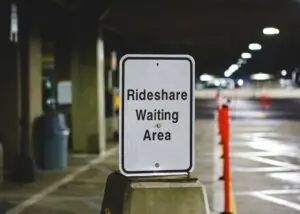
California’s insurance requirements for rideshare companies change depending on what the driver was doing in the app when the crash occurred. Public Utilities Code §5433, amended by SB 371, sets the current requirements as of January 1, 2026.
A driver waiting for a ride request falls under one set of insurance minimums. Once the driver accepts a ride, the $1 million primary-liability requirement applies, even before the passenger gets into the vehicle. That distinction affects which insurance requirements apply and which insurer handles the claim.
| What the Driver Was Doing | Current California Insurance Requirement |
| App on, waiting for a ride request | At least 50,000/100,000 bodily injury, $30,000 property damage, plus at least $200,000 excess liability |
| Ride accepted, driving toward pickup | $1 million primary TNC liability |
| Passenger in the vehicle | $1 million primary TNC liability, plus passenger UM/UIM of $60,000/person and $300,000/incident |
These are insurance requirements, not guaranteed payouts. The actual coverage investigation depends on the facts and policies involved.
What Changed About Passenger UM/UIM Coverage in 2026?
California reduced the required rideshare passenger UM/UIM coverage on January 1, 2026. The former requirement was $1 million. The current statutory minimum is $60,000 per person and $300,000 per incident while the passenger is in the vehicle.
That change matters when another driver causes the crash and lacks enough insurance. The available rideshare UM/UIM coverage for the passenger is now significantly lower than it was previously.
What if the Driver’s App Status Is Disputed?
Public Utilities Code §5435 requires rideshare companies or their insurers to cooperate with other insurers during a coverage investigation. That cooperation includes sharing the precise times the driver logged on and off the platform.
Login and logout times alone do not answer every status question. A driver who is logged in may be waiting for a request or may have already accepted a ride, and those situations carry different coverage requirements. Trip records and platform information help clarify which period the driver was in, not just whether the app was turned on.
Trip records and platform timestamps help clarify the driver’s actual status. A collision report may also document what the people involved said about the trip. Together, those sources give insurers a more complete picture of which coverage period applies.
What if Someone Other Than the Rideshare Driver Caused the Crash?
An injured rideshare passenger may have a claim against the other driver rather than the rideshare driver. Fault still depends on what each driver did, and the other driver’s liability insurance may be the primary coverage source.
When the other driver lacks enough insurance to cover the passenger’s losses, the rideshare company’s passenger UM/UIM coverage may become relevant. As of 2026, that coverage is $60,000 per person and $300,000 per incident. Other applicable coverage on the passenger’s own auto policy may also need review, depending on the facts.
What Records Should You Keep While You Recover?
Keep the records that show what treatment you received, how the injuries affected your work, and what expenses resulted from the crash. These records connect the collision to the losses the claim addresses.
Useful records to organize include:
- Medical bills and treatment records you receive after the crash
- Prescription receipts and out-of-pocket medical expenses
- Work notes, employer correspondence, or pay records showing missed time
- Receipts for documented accident-related expenses, such as transportation or equipment
- Emails or app messages from Uber, Lyft, or their insurance representatives
These records do not need to be perfect or complete from day one. Keeping them organized as they arrive makes the claims process easier to manage later.
How Do You Get a San Jose Collision Report?
The San Jose Police Department allows vehicle accident reports to be requested online, in person, or by mail. SJPD advises allowing a minimum of 45 days after the collision before making an online inquiry because reports may not yet be available due to processing volume.
Not every San Jose-area rideshare crash produces an SJPD report. If CHP investigated the collision, the report comes through CHP rather than SJPD. When both the police report and the rideshare platform report exist, they provide separate records of the collision and the rideshare company’s account.
When Does a Rideshare Accident Claim Need Legal Review?
A rideshare accident claim may benefit from legal review when the driver’s app status is unclear, several insurers are involved, or the facts about who caused the crash are disputed. These situations create questions about which insurance applies and who bears responsibility that go beyond an ordinary car accident claim.
Other situations that make legal review useful include:
- The rideshare driver says the app was off, but the trip record suggests otherwise
- Multiple insurers are involved and each points to the other for coverage
- Another driver caused the crash but has limited liability insurance
- The platform or an insurer requests information or a statement that you do not fully understand
- Injuries keep you out of work or lead to substantial medical bills
A passenger may hear from the rideshare company’s insurer, the other driver’s insurer, and potentially another carrier. When those companies give different explanations about responsibility or coverage, reviewing the trip status and applicable policies helps clarify which insurer addresses which part of the claim.
Our attorneys handle San Jose rideshare accident claims involving Uber, Lyft, and other app-based transportation and help sort out the coverage and fault disputes that make these cases different from ordinary car accidents.
Frequently Asked Questions About What to Do After a San Jose Rideshare Accident
What if I Was a Guest Passenger and Did Not Book the Uber or Lyft?
A guest passenger may still be part of an accident claim even when someone else ordered the ride. The person who booked the trip may have the receipt, driver details, and ride history needed to connect the passenger to the specific ride. Checking with the person who placed the order is a practical first step.
What if the Driver Accepted a Ride but Had Not Picked Up the Passenger Yet?
California’s $1 million primary TNC liability requirement applies from the moment the driver accepts a ride request, not from the moment the passenger enters the vehicle. A crash during the drive to the pickup falls under the same coverage requirement as a crash during the ride itself.
What if the Rideshare Driver Says the App Was Off?
The driver’s statement does not necessarily end the coverage question. Trip records and platform data help determine the driver’s actual status. California law also requires rideshare companies or their insurers to share login and logout timing with other insurers involved in a coverage investigation.
What if I Cannot Find the Ride in My Uber or Lyft App?
Other records may help identify the trip. An emailed receipt, a payment-card transaction, app messages, the account of the person who booked the ride, or a platform accident-report confirmation may all contain information linking the crash to a specific ride. Checking email and payment records is a good place to start.
Does a Rideshare Trip to San José Airport Have Different Insurance Rules?
No. Rides to or from San José Mineta International Airport follow the same California rideshare insurance framework as any other trip. Coverage depends on the driver’s app and ride status, not on whether the trip started or ended at the airport.
Talk With M&Y About Your San Jose Rideshare Accident

When several insurers give different explanations about who is responsible, or when the driver’s app status is unclear, sorting out which coverage applies becomes the first practical problem. A rider who does not know whether the rideshare insurer or the other driver’s carrier handles the claim faces a confusing process with real financial consequences.
M&Y Personal Injury Lawyers offers free, no-obligation consultations for San Jose rideshare accident claims. Call 408-521-1701 or contact us online. We handle these cases on a contingency-fee basis, so there is no attorney fee unless we win.