
Why Are Lane Position and Vehicle Movement Important in a Sunnyvale Crash?
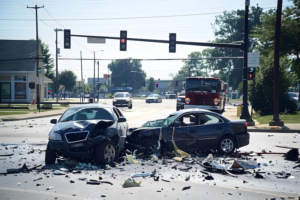 Lane position and vehicle movement matter because many disputed crashes turn on which driver entered another vehicle’s path first. A freeway merge, an exit-ramp lane change, a left turn at a signalized intersection, and a sudden stop in queued traffic each create a different movement question.
California requires drivers changing lanes to signal, check mirrors and blind spots, and confirm enough room before moving over. A driver changing lanes must make sure the movement is safe and signal when another vehicle may be affected.
That rule matters most when both drivers claim the other moved into their lane. The physical evidence, not just the competing statements, helps establish which version the crash supports.
What Evidence Helps Show Which Vehicle Changed Lanes?
Lane-change disputes are strongest when the evidence shows vehicle position and movement rather than relying only on competing driver statements. A Sunnyvale car accident attorney reviews multiple sources to reconstruct the sequence.
Evidence that helps establish lane position and movement includes:
- Dashcam footage or nearby surveillance video capturing vehicle paths before impact
- Photographs showing damage location and contact patterns on both vehicles
- Witness observations from other drivers or pedestrians near the collision
- Vehicle event data or navigation information when available and relevant
- Lane markings, roadway geometry, and ramp configuration at the crash location
Damage patterns alone do not prove which vehicle changed lanes. But damage location, combined with movement evidence and roadway geometry, narrows the question.
Different evidence answers different questions about the movement that led to the collision.
|
Disputed Question |
Evidence That May Help |
What It Clarifies |
|
Which vehicle entered the lane? |
Dashcam, surveillance, witness accounts |
Vehicle movement before impact |
|
Where did contact begin? |
Damage photographs, inspection records |
Initial area of contact |
|
Was traffic stopping or moving? |
Video, witness accounts, vehicle data when available |
Traffic flow before the crash |
|
Which signal phase applied? |
Signal records, video, witness accounts |
Intersection movement |
|
How did a chain reaction unfold? |
Damage sequence, reports, video, statements |
Order of impacts |
Can Sunnyvale Traffic-Signal Records Help Explain an Intersection Crash?
 Traffic-signal records become relevant when drivers disagree about which movement had the green light or how an intersection was operating. Sunnyvale’s official Documents Portal lists traffic safety reports and studies as well as traffic signal logs under Public Works records.
Signal logs provide information about the signal system at a particular location. Roadway plans establish intersection configuration. But a log does not automatically establish what a specific driver saw or did.
Video, witnesses, and other evidence are still needed to connect signal operation to each driver’s actual movement. A car accident lawyer in Sunnyvale reviews signal information alongside other crash evidence rather than treating any single record as conclusive.
What Makes US 101, SR 237, and Sunnyvale’s Expressway Connections Relevant?
Sunnyvale sits where major freeway, express-lane, arterial, and local-road movements connect. Crashes near these corridors can involve merging, exiting, and several lanes of traffic moving at different speeds.
VTA’s Silicon Valley Express Lanes include SR 237 express lanes extending to near Mathilda Avenue in Sunnyvale and US 101 express lanes through the area. Sunnyvale’s own transportation analyses examine US 101 ramps at Mathilda, Fair Oaks Avenue, and Lawrence Expressway alongside SR 237 connections.
On a merge or ramp crash, the exact lane, direction of travel, ramp configuration, and point of contact matter more than simply noting the crash happened “on 101.” A Sunnyvale crash lawyer reviews the specific corridor geometry alongside the vehicle and medical evidence.
How Do You Document the Exact Crash Location?
A precise crash location helps identify lane geometry, ramps, nearby cameras, roadway records, and the agency that investigated the collision. Preserving location details after the crash supports a more accurate reconstruction.
Useful location details include:
- Direction of travel and nearest exit or cross street
- Lane position, ramp, or merge area where the collision occurred
- Photographs showing signs, lane markings, or landmarks near the crash
- Map or location information already available on the person’s phone
Location and lane information become especially important when the crash occurred during a merge, lane change, or ramp transition. A Sunnyvale auto accident lawyer uses these details to connect the physical evidence to the specific roadway configuration.
How Can Roadway Geometry Help Explain a Merge Crash?
Roadway geometry clarifies which movements were available to each driver before a merge or lane-change collision. Lane drops, merge tapers, entrance ramps, exit-only lanes, pavement markings, and barriers all affect where vehicles were able to travel.
The physical layout does not decide fault by itself. It provides a framework for comparing driver statements with photographs, video, damage patterns, and witness accounts.
Identifying where a merge lane ended helps determine how much roadway remained before two vehicles came together. Ramp photographs and roadway plans also show whether a driver was entering through traffic, leaving the freeway, or moving between established lanes.
That context is especially useful when both drivers remember the same seconds differently. The claim compares each account with the roadway that actually existed at the crash location.
What if Several Vehicles Were Involved in the Same Crash?
 A multi-vehicle crash requires separating each impact instead of assuming every driver caused the same part of the collision. The first impact can start a chain reaction. A later vehicle can cause an additional impact. Different drivers can bear different shares of responsibility.
Damage locations help establish the order of impacts. A vehicle struck from behind and then pushed into the car ahead shows a different damage pattern from a vehicle that independently rear-ended stopped traffic. Reports, video, witness statements, and damage inspections each address a different part of the sequence.
One driver being at the rear of a chain does not automatically resolve every liability question. The evidence must establish what each vehicle was doing before and during the sequence.
Does Rear-End Position Automatically Decide Fault?
The rear position of a vehicle is important evidence, but it does not by itself answer every fault question in a multi-vehicle collision. Several scenarios require closer analysis.
A vehicle pushed into the car ahead by another impact raises a different fault question from a vehicle that independently rear-ends stopped traffic. A sudden lane change immediately before braking changes the movement picture. Multiple impacts involving several vehicles create separate contact events that need individual evaluation.
California requires drivers to maintain enough following distance to react safely when traffic slows or stops. But the following-distance question depends on speed, traffic, roadway conditions, and whether another vehicle’s movement created the hazard.
If the drivers disagree about the lane change, merge, or sequence of impacts, we review the available video, vehicle evidence, reports, and medical records with you. Call 866-864-5477 for a free consultation.
How Do You Request a Sunnyvale Traffic Accident Report?
 If Sunnyvale Public Safety investigated the crash, a person involved in the collision can request the report through the department’s traffic-report process. Reports are available under applicable California law.
For crashes investigated by CHP rather than Sunnyvale Public Safety, the report comes from the Highway Patrol. Confirm which agency actually responded before requesting the report.
When Is a California DMV SR-1 Required?
California DMV requires an SR-1 within 10 days when someone is injured or killed or property damage exceeds $1,000. The SR-1 is separate from police, CHP, or insurer reports and applies regardless of fault.
What Losses Does a Sunnyvale Car Accident Claim Address?
A claim addresses documented medical expenses, income loss, vehicle-related costs, supported future losses, and non-economic effects such as pain and functional limitations. Each category requires its own records connecting the loss to the collision.
Medical treatment and follow-up care document the injury and recovery. Wage records and employer documentation show missed work. Repair estimates, total-loss evaluations, and transportation expenses address vehicle-related costs. Future losses require medical or vocational evidence supporting a continuing need.
Medical and wage records document the personal losses, while repair, transportation, and other vehicle-related records document the financial effects outside medical care.
How Does Our South Bay Practice Serve Sunnyvale?
Sunnyvale sits between several South Bay communities, so crashes, treatment, witnesses, and insurance records regularly cross city boundaries. A San Jose car accident lawyer from our team handles neighboring collisions when the facts connect to San Jose.
A Santa Clara car accident lawyer from our team handles collisions in neighboring Santa Clara or cases involving Santa Clara-specific records.
Sunnyvale is northwest of San Jose, where our San Jose office is located at 84 W. Santa Clara St., Suite 723.
Reconstructing What Happened Takes the Right Evidence
 A Sunnyvale car crash often turns on seconds of vehicle movement. Lane position, merges, signal operation, traffic flow, and multi-vehicle sequencing establish how the collision unfolded. Medical records then show what happened to the person inside the vehicle.
M&Y Personal Injury Lawyers serves Sunnyvale from our nearby San Jose office at 84 W. Santa Clara St., Suite 723. We review how the crash unfolded, identify the evidence that matters, and explain the next steps in the claim.
We offer free consultations with no obligation. We handle claims on a contingency basis and collect no fee unless we recover compensation. Our phones are answered 24 hours a day, seven days a week.
Call 866-864-5477 to talk through the crash evidence and what options may be available.