
What Records Matter After a Santa Clara Car Accident?
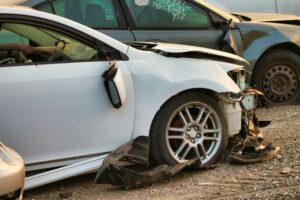 A Santa Clara crash creates several separate records, and each serves a different purpose. The collision report documents what law enforcement observed. Medical records document the injury. Insurance information identifies available coverage.
Which agency creates the collision report depends on which agency investigated the crash. Confirm which law-enforcement agency actually responded before requesting the report.
|
Record or Report |
Who Handles It |
What It Does |
|
Santa Clara Police, when it investigates the collision |
Records collision information gathered by the investigating agency |
|
|
California Highway Patrol, when CHP investigates the collision |
Records the crash under CHP jurisdiction |
|
|
California DMV |
Separately reports qualifying collisions to DMV |
|
|
Medical records |
Treating providers |
Document injuries, symptoms, treatment, and follow-up |
A police report and a DMV SR-1 are not the same thing. The California DMV requires an SR-1 within 10 days when someone is injured or killed or property damage exceeds $1,000. That requirement applies regardless of fault and is separate from any report to police, CHP, or an insurer.
How Do You Obtain a Santa Clara Collision Report?
 People involved in a Santa Clara vehicle collision can request the accident report after the investigating agency finishes processing it. Santa Clara Police accepts report requests through its public-records portal, by mail, or in person. The department states that paperwork generally takes about 10 days to process.
Santa Clara’s online police-reporting portal handles certain nonemergency reports. Vehicle accident reports are requested separately through the Police Department’s records process.
For crashes investigated by CHP, the report comes from the Highway Patrol rather than city police. Knowing which agency responded helps locate the correct report.
What Can Vehicle Damage Tell You About How the Crash Happened?
Vehicle damage helps establish where and how the cars made contact. Impact location, direction of force, crush patterns, and final resting positions give context that driver statements alone may not provide.
Vehicle damage alone does not establish the nature or severity of an occupant’s injuries. Vehicle evidence and medical evidence answer different questions. Clear photographs, repair estimates, and inspection records preserve the relevant vehicle evidence before repairs change the post-crash condition.
Why Can the Body Be Injured Differently From the Vehicle?
The forces acting on a vehicle and the person inside it are related, but they do not affect metal, restraints, body movement, and internal tissues the same way. Understanding the three collisions in a car crash helps explain why vehicle photographs and medical findings need to be reviewed together.
The first collision occurs when the vehicles make contact. The second occurs when the occupant’s body continues moving until a seat belt, airbag, or interior surface changes that movement. The third occurs inside the body as organs and tissues experience rapid changes in speed.
That framework explains why seat-belt use, airbag deployment, headrest position, and occupant movement matter alongside the vehicle damage. A Santa Clara car accident attorney reviews both the crash mechanics and the medical record to understand how the impact produced the documented injuries.
What Can Seat Belt and Airbag Evidence Show After a Crash?
Seat belt use and airbag deployment can help explain how an occupant moved during a collision. Photographs of the interior, airbag deployment, restraint condition, and documented points of contact can add context to the vehicle damage and medical record.
That evidence does not determine injury severity by itself. A deployed airbag does not prove that a particular injury occurred, and the absence of deployment does not rule one out. The value comes from comparing the restraint evidence with the crash mechanics, occupant position, and documented medical findings.
What Happens to Vehicle Evidence After Towing or Repairs?
 A damaged vehicle preserves information about where the impact occurred and how the collision affected the car. Repairs, salvage, or disposal change that physical condition. Photographs and other documentation become important before the vehicle changes hands.
Repair estimates, total-loss evaluations, tow records, and photographs from several angles preserve different parts of the vehicle’s post-crash condition. An inspection may also be useful when a specific mechanical or collision issue is disputed.
Not every claim requires the vehicle to remain untouched. The amount of preservation needed depends on the questions in dispute and what documentation already exists.
What if the Drivers Give Different Accounts of the Collision?
When drivers give conflicting accounts, independent evidence becomes more important. Other records help clarify what happened when the claim cannot rely on either person’s description alone.
Independent records that help resolve disputed accounts include:
- Scene photographs or video showing vehicle positions, road conditions, and damage
- Vehicle damage patterns indicating the direction and location of impact
- Witness statements from people who observed the collision
- Traffic-camera or surveillance footage when available
- Collision report observations, diagrams, and any citations issued
These records do not always agree with each other either. But reviewing them together reveals more about the collision than any single source.
Several of our South Bay car accident attorneys previously represented insurers or corporate defendants. That background informs how we organize collision evidence when fault or injury causation is disputed.
If the driver accounts, vehicle damage, and collision report do not tell the same story, we review those records alongside the medical evidence and insurance information. Call 866-864-5477 for a free consultation.
Why Can Car-Accident Injuries Become Clearer After the First Medical Visit?
 The first medical visit records the person’s condition at that point in time. Follow-up examinations can document symptoms, functional limits, or diagnoses that were not established during the initial visit.
Treatment records, therapy notes, and work restrictions accumulate as recovery progresses. Later findings need medical support connecting them to the crash. The claim tracks the treatment record over time rather than relying only on the first emergency evaluation.
That ongoing documentation is where the medical picture takes shape.
What Financial Records Matter After a Santa Clara Car Accident?
A car-accident claim needs records connecting each claimed loss to the collision and the resulting injuries. Different categories require different documentation.
Financial records that a Santa Clara auto accident lawyer reviews include:
- Medical bills, treatment records, and rehabilitation expenses tied to the collision
- Wage records, schedules, and employer documentation showing missed work
- Repair estimates, total-loss evaluations, and related vehicle expenses
- Towing, rental, and transportation costs connected to the crash
- Supported future treatment or work losses when medical evidence establishes a continuing need
Each category stands on its own documentation. The collision report, medical record, employment evidence, and vehicle records together show how the crash affected the person financially.
How Does a Santa Clara Car Claim Connect to the San Jose Practice?
Santa Clara directly borders San Jose, where our San Jose office is located at 84 W. Santa Clara St., Suite 723. A San Jose car accident lawyer from our team also handles collisions across the city boundary when the crash or related records connect to San Jose.
A Santa Clara County car accident lawyer reviews collision records, medical documentation, and insurance information regardless of which city’s name appears on the report.
One Crash Creates Many Records
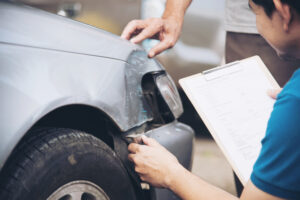 A Santa Clara car accident leaves behind collision reports, vehicle evidence, medical documentation, insurance information, and sometimes conflicting accounts. Reviewing those records together is more useful than relying on any single report, photograph, or diagnosis.
M&Y Personal Injury Lawyers serves Santa Clara from our nearby San Jose office at 84 W. Santa Clara St., Suite 723. We review the collision records, insurance issues, medical documentation, and next steps with you.
We offer free consultations with no obligation. We handle claims on a contingency basis and collect no fee unless we recover compensation. Our phones are answered 24 hours a day, seven days a week.
Call 866-864-5477 to talk through the crash evidence and what options may be available.