
Why Do the Seconds Before a Motorcycle Crash Matter So Much?
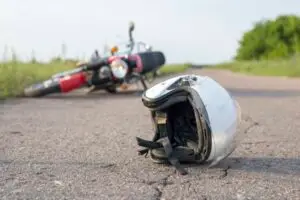 Motorcycle claims are built around movement. A car accident between two enclosed vehicles leaves bumper damage, paint transfer, and crumple patterns that tell a relatively contained story.
A motorcycle collision scatters the evidence across a wider area because the rider separates from the vehicle, the motorcycle travels independently after impact, and the contact points between the motorcycle and another vehicle help establish the collision angle and relative vehicle positions at impact.
That physical record helps resolve disputed fault when it is compared with video, witness accounts, and the drivers’ statements. A driver who says the motorcycle appeared out of nowhere has made a statement that the crash evidence either supports or contradicts. Where the rider was in the lane, which part of each vehicle made contact, and what the surrounding traffic was doing all feed into the reconstruction.
The challenge for an injured rider is that this evidence needs to be gathered and interpreted while the rider is still dealing with medical treatment, lost income, and a damaged motorcycle. M&Y handles that reconstruction work from the start of every San Jose motorcycle accident claim.
Does Lane Splitting Change a San Jose Motorcycle Accident Claim?
California Vehicle Code § 21658.1 defines lane splitting as operating a two-wheeled motorcycle between rows of stopped or moving vehicles in the same lane. Lane splitting is legal in California, and CHP publishes safety guidance addressing speed, speed differential, surrounding vehicles, and road conditions.
The legal question after a lane-splitting collision is not whether the rider was between lanes. It is what each road user did in the moments before contact. A driver who changes lanes into a splitting motorcycle without checking mirrors or signaling raises a different fault picture than a rider traveling at high speed through minimal gaps in slow traffic.
What Evidence Helps Resolve a Lane-Splitting Dispute?
Congested traffic on I-880 or US-101 creates conditions where riders legally split between rows of stopped or moving vehicles. The investigation compares rider speed against surrounding traffic speed, the width of the gap, whether the car signaled or drifted, and where contact occurred on each vehicle.
Dashcam footage from other commuters, business surveillance near freeway on-ramps, and the damage locations on the motorcycle and car all contribute to the reconstruction. Damage locations help establish the contact angle and are compared with lane position, video, and witness evidence to determine how the vehicles moved before impact.
How Does M&Y Reconstruct a San Jose Motorcycle Collision?
 The reconstruction follows the collision forward through three stages. Each stage produces different evidence and answers different questions.
Before the Vehicles Collided
The pre-impact picture establishes where each vehicle was traveling, in which direction, and at what relative speed. Lane position, traffic flow, turn signals, and surrounding vehicles all matter. Available video from dashcams, traffic cameras, or nearby businesses captures this stage directly when footage exists.
At the Moment of Impact
The contact point between the motorcycle and the other vehicle reveals the collision angle and the relative positions of both vehicles. A motorcycle struck on its left side by the front-right corner of a car tells a different story than a motorcycle that contacts the rear quarter panel of a vehicle ahead.
M&Y compares the physical damage against each driver’s account to test whether the versions match the evidence.
After Impact
Final resting positions, debris patterns, roadway marks, and the locations of the motorcycle and rider help reconstruct direction, movement, and crash severity. Police or CHP documentation records the scene. Medical records document the injuries diagnosed after the collision and the treatment that followed.
What if the Other Side Questions the Rider’s Speed or Conduct?
Rider speed is one of the first issues an insurer examines after a motorcycle collision. The question that matters is whether rider speed actually changed the outcome, not whether the rider was traveling above or below a particular number.
California Vehicle Code § 22350 prohibits driving faster than is reasonable or prudent under the conditions. Video, physical crash evidence, vehicle positions, and witness accounts help establish what the rider’s actual speed was and whether it contributed to the collision.
Under California Civil Code § 1714, both parties’ conduct factors into responsibility. A driver’s unsafe movement and a rider’s speed are evaluated separately for the role each played in causing the crash. When both contributed, California’s comparative-fault principles allocate responsibility according to the evidence.
M&Y addresses speed allegations with the same crash evidence used to establish fault: distance, timing, damage, and available video.
How Does a Motorcycle Injury Change What the Claim Needs to Account For?
 Motorcyclists lack the surrounding vehicle structure available to occupants of passenger cars. That physical exposure means the same collision forces produce different injuries and different long-term consequences.
A rider separated from the motorcycle at impact contacts pavement, other vehicles, or roadside objects. The resulting injuries, including traumatic brain injury, spinal damage, fractures, road rash, internal injuries, and permanent scarring, reflect that direct exposure.
The injury mechanism matters for the claim because it connects specific crash forces to specific diagnoses. The claim accounts for how the crash changed the rider’s life in concrete terms:
- Medical care already received and treatment the medical evidence supports going forward
- Income lost during recovery and reduced future earning ability when injuries limit work
- Physical restrictions that change how the rider handles daily responsibilities
- Long-term impairment, disability, or visible scarring
- Motorcycle and riding-equipment replacement
- Pain and other non-economic effects recognized under California injury law
Each category requires documentation that ties the loss to this specific collision. M&Y develops that documentation alongside the crash reconstruction so the injury evidence and the liability evidence support each other.
Do I Need a Lawyer After a San Jose Motorcycle Accident?
Legal representation becomes important when the crash produced substantial injuries and the other side is examining the rider’s conduct before impact. Motorcycle claims involve lane-position disputes, speed allegations, lane-splitting questions, and visibility arguments that do not arise in ordinary car crashes.
Specific complications that benefit from legal preparation include:
- Serious injuries that require ongoing treatment or affect future work
- A lane-splitting collision where the insurer questions the rider’s speed or gap
- A lane-change crash where the driver denies seeing the motorcycle
- Multiple vehicles involved with unclear fault allocation
- A driver who left the scene
- Uncertainty about whether the other driver’s insurance covers the documented losses
M&Y reviews how the vehicles moved, identifies available video and witnesses, documents injuries and financial losses, and addresses fault arguments using the actual crash evidence. For injury claims outside the motorcycle context, M&Y’s San Jose personal injury lawyers handle car, truck, bicycle, pedestrian, and other collision claims across Santa Clara County.
What Does M&Y Bring to a San Jose Motorcycle Claim?
 M&Y separates assumptions about motorcycle riding from what the crash evidence actually proves. Several of the firm’s attorneys previously worked in insurance defense, which means they recognize how disputes over lane position, splitting speed, rider visibility, and protective gear are evaluated from the insurance side, and they prepare the evidence file to address each one.
The firm has recovered over $1 billion for California injury victims and brings more than 100 employees to support investigations across the state. Every client works directly with an attorney. M&Y also handles motorcycle claims through its Los Angeles motorcycle accident practice and other California offices.
You pay no attorney fees unless we recover compensation. Contact M&Y Personal Injury Lawyers or call 866-864-5477.
The Details That Decide a Motorcycle Claim Start Small
 A lane line, the beginning of a turn, a signal, a few seconds of video, or where the vehicles came to rest — M&Y builds San Jose motorcycle accident claims from those details outward, connecting each piece of evidence to the larger question of what happened and who bears responsibility.
Contact M&Y Personal Injury Lawyers or call 866-864-5477 for a free consultation. You pay no attorney fees unless we recover compensation. We are available 24/7.