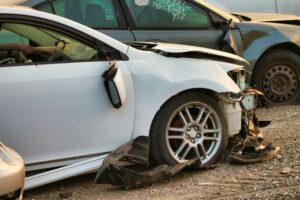
Multi-car accident liability in California rarely lands on one driver. A chain-reaction crash on the 405 or Highway 99 can involve three, four, or five vehicles, each with a different insurer and a different version of what happened.
The harder question is often collection, not blame. When two drivers share fault and only one carries enough insurance to cover a serious injury, the way California splits economic and non-economic damages decides how much of your loss you can recover. M&Y Personal Injury Lawyers can help you sort out which policies and parties are responsible for your claim.
The Essentials of a Pile-Up Claim
- California assigns each party in a multi-car crash a percentage of fault, and the percentages add up to 100.
- California keeps joint liability for economic damages, so each at-fault defendant can be held responsible for the full amount of an injured person’s medical bills, lost wages, and other financial losses.
- Non-economic damages, such as pain and emotional distress, are divided so each defendant pays only its own share.
- An at-fault driver’s per-accident policy limit is shared by everyone that driver injured.
- Underinsured motorist coverage applies only after the at-fault drivers’ liability limits are used up.
How Is Multi-Car Accident Liability Divided in California?
Fault in a multi-car crash is divided by percentage among every driver, company, or agency whose carelessness contributed. A jury, or an insurer in negotiation, assigns each one a share, and the total equals 100%.
Fault Comes in Percentages, Not All or Nothing
California follows a pure comparative fault system. That means an injured person who was 10% responsible still recovers 90% of their damages, and a driver who was 60% responsible can still pursue the other 40%. California’s comparative negligence rule applies the same way whether two cars or six were involved.
The Order of Impacts Matters
Chain-reaction crashes usually involve a series of collisions seconds apart. The driver who started the chain often carries the largest share, but a later driver who was following too closely can be responsible for a second impact and the injuries it caused.
Rear Position Does Not Settle the Question
Being the last car in line doesn’t automatically make a driver liable for every impact ahead. Sudden lane changes, broken brake lights, and a driver who slammed into stopped traffic farther up can all shift responsibility, as the rear-end fault myth explains.
How Does Proposition 51 Split Economic and Non-Economic Damages?

California Civil Code 1431.2, approved by voters as Proposition 51, treats the two main categories of damages differently when several defendants share fault. The split determines who you can collect from if one driver can’t pay.
The rule works like this:
Type of Damages | Examples | How Liability Works |
|---|---|---|
Economic | Medical bills, lost wages, future care costs, vehicle repair | Joint and several: each at-fault defendant can be made to pay the full amount |
Non-economic | Physical pain, emotional distress, loss of enjoyment of life | Several only: each defendant pays only its own percentage |
Under Civil Code 1431.2, a court enters a separate judgment against each defendant for its share of non-economic damages. A defendant that pays more than its share of the economic damages can pursue the other defendants for their portions, but that dispute is between the defendants, not the injured person.
A Worked Example on a Sacramento Freeway
Suppose a driver stopped in traffic on I-5 is hit by Car 1, which was pushed by Car 2 traveling too fast to stop. A jury finds Car 2 responsible for 75% and Car 1 for 25%, and awards $100,000 in economic damages and $200,000 in non-economic damages.
Either driver can be made to pay the full $100,000 in economic damages. For non-economic damages, Car 2 owes $150,000 and Car 1 owes $50,000, and if Car 1 has no assets, that $50,000 may never be collected. A chain-reaction case we handled on State Route 91 shows how both drivers’ insurers can end up paying for their roles.
When You Share Some of the Fault
Your own share of fault comes off the top before the defendants’ shares are applied. Suppose the jury instead found you 10% at fault, Car 2 67.5%, and Car 1 22.5%. Your economic recovery would drop to $90,000, still collectible from either driver, and your non-economic damages would drop to $180,000, with Car 2 owing $135,000 and Car 1 owing $45,000.
Why Do Multi-Car Claims Run Short on Insurance?
Multi-car claims can run short on insurance when several injured people compete for one at-fault driver’s coverage. A liability policy has a per-person limit and a per-accident limit, and the per-accident amount is the most that policy pays for everyone that driver hurt.
California’s required minimums for policies issued or renewed since January 1, 2025, are listed in Vehicle Code 16056:
- $30,000 for injury or death to one person
- $60,000 for injury or death to two or more people in one accident
- $15,000 for property damage
When four people are hurt by a driver with a $60,000 per-accident limit, those four claimants share that $60,000. Additional sources can include the other at-fault drivers’ policies, an employer’s commercial policy if a driver was working, and your own coverage.
Commercial Policies in the Mix
Pile-ups on freight routes often involve a delivery van, box truck, or big rig. When a driver was working at the time, the employer’s commercial policy may apply. Those policies typically carry far higher limits than the state minimums, which can change the collection picture for everyone hurt in the crash.
When Your Own Underinsured Motorist Coverage Steps In
Underinsured motorist coverage can fill part of the gap, but only after specific conditions are met. Insurance Code 11580.2 requires that the liability limits of all the at-fault vehicles be exhausted first, and your insurer’s payment is reduced by what you already received from those drivers.
Settling With One Driver Before the Others
Settling with one at-fault driver doesn’t release the remaining drivers unless the agreement says so. Under Code of Civil Procedure 877, a good-faith settlement with one defendant reduces the claims against the others by the settlement amount. It also protects the settling driver from contribution claims by the other defendants.
Why the Release Language Matters
A release drafted for a two-car crash can accidentally cover parties you never meant to let go. Confirming that it names only the settling driver and that driver’s insurer protects your claims against everyone else.
Timing Settlements Around Policy Limits
The order of settlements can change the total you collect. A defendant with a small policy may offer its limits early, while the driver with more coverage holds out to see how fault shakes out. Mapping each driver’s economic and non-economic share before any one claim closes keeps an early settlement from costing you later.
What Evidence Sorts Out a Chain-Reaction Crash?
Evidence that pins down the sequence of impacts carries the most weight. Investigators and insurers look for proof of which car hit which, how fast, and in what order:
- Traffic camera, dashcam, and nearby business video showing the chain of impacts
- Vehicle event data recordings of speed and braking in the seconds before each collision
- Crush damage and paint transfer showing the direction and force of each hit
- Statements from drivers, passengers, and uninvolved witnesses taken while memories are fresh
- The police or California Highway Patrol collision report and any scene diagrams
Video and electronic data disappear fastest, so preservation requests usually go out in the first days after a crash. Once a car is repaired or sold for salvage, its damage pattern and stored data may be gone.
Practical Steps and Deadlines After a Multi-Car Crash
A multi-car claim stays manageable when a few things are gathered early:
- The name, insurer, and policy number for every driver involved, not only the one who hit you
- The collision report, which usually lists every vehicle and witness
- Every medical record, bill, and work note in one place, since economic damages must be proven dollar for dollar
- A report to your own insurer, along with a check of your underinsured motorist and medical payments coverage
- A note of any government vehicle or road condition involved
A California injury lawsuit has to be filed within two years under Code of Civil Procedure 335.1. A claim against a public agency, such as a city bus operator or Caltrans, has to be presented in writing within six months under Government Code 911.2. Exceptions, such as the pause for injured minors, can extend the lawsuit deadline.
Proving Multi-Car Accident Liability Against Several Insurers
Multi-car claims pit an injured person against several insurance companies at once, each pointing at the others. Many of our attorneys used to work for insurance companies, and they know how adjusters build fault percentages that minimize what their own driver pays.
Building the Case Around Every Policy
A strong multi-car claim accounts for every policy that may apply, from each driver’s liability coverage to commercial and underinsured motorist coverage. When a case heads toward trial, we retain outside professionals, such as accident reconstructionists, to establish the sequence of impacts. Complex cases sometimes call for co-counseling with another firm to add resources.
Staying Informed While Several Claims Move at Once
Each client has a dedicated team and a concierge line they can text 24/7, along with automated updates on what is happening and what comes next. With several insurers on different timelines, knowing where each claim stands keeps a pile-up case from feeling like five separate fights.
Untangling a Crash With Too Many Moving Parts
 A pile-up leaves you dealing with several insurers who each have a reason to point somewhere else. Getting the fault split right and finding the coverage behind it requires early evidence and a clear view of every policy in play.
If you were caught in a chain-reaction crash, a Los Angeles car accident lawyer on our team can help map out who owes what and which policies stand behind them. M&Y Personal Injury Lawyers charges nothing unless we recover compensation for you, and each case turns on its own facts. Call 866-864-5477 to start.