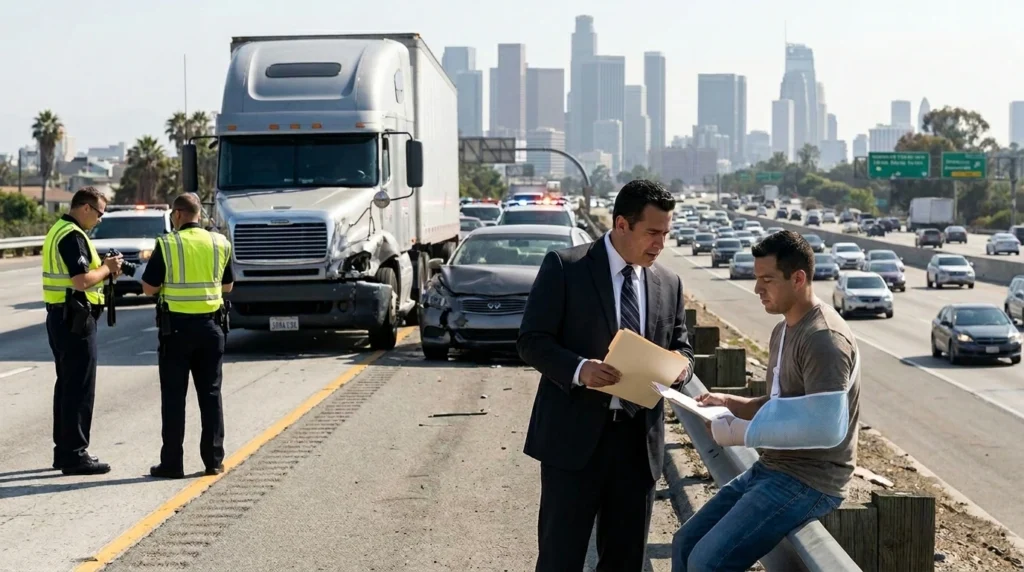
Truck accidents are often far more complex than ordinary car crashes.
Because commercial trucks are large, heavy, and subject to federal and state regulations, these cases can involve severe injuries, multiple liable parties, and high insurance coverage.
This guide explains how truck accident claims work in Los Angeles and what injured victims should know.
Table of Contents
ToggleQuick Answer
Los Angeles truck accident claims are more complicated than standard car accident cases because they may involve trucking companies, commercial insurance policies, federal safety rules, and multiple sources of evidence.
Why Truck Accidents Are Different
Commercial truck cases differ from typical passenger vehicle accidents because of:
- Greater injury severity
- Federal and state regulations
- Electronic driving logs
- Maintenance records
- Cargo loading issues
- Multiple potentially liable parties
- Larger insurance policies
How Big Are Commercial Trucks?
A fully loaded tractor-trailer can weigh up to 80,000 pounds, while a passenger vehicle typically weighs a small fraction of that amount.
The force generated in a collision can cause catastrophic injuries.
Common Causes of Truck Accidents in Los Angeles
Truck crashes may result from:
- Driver fatigue
- Distracted driving
- Speeding
- Improper lane changes
- Brake failure
- Poor maintenance
- Overloaded cargo
- Improper cargo securement
- Inadequate driver training
- Driving under the influence
Common Types of Truck Accidents
Rear-End Collisions
Because trucks require more stopping distance, rear-end crashes can be devastating.
Jackknife Accidents
The trailer swings outward, creating a dangerous angle with the tractor.
Rollover Accidents
High speeds, sharp turns, and shifting cargo can cause rollovers.
Underride Collisions
A smaller vehicle may slide beneath the trailer.
Wide Turn Accidents
Trucks need extra space to turn, which can trap nearby vehicles.
Tire Blowouts
Sudden tire failures can lead to loss of control.
Common Truck Accident Injuries
- Traumatic brain injuries
- Spinal cord injuries
- Paralysis
- Broken bones
- Internal organ damage
- Severe burns
- Amputations
- Wrongful death
Who May Be Liable?
Truck accident cases often involve multiple defendants.
Potentially Responsible Parties
- Truck driver
- Trucking company
- Vehicle owner
- Cargo loading company
- Maintenance contractor
- Parts manufacturer
- Broker or logistics company
Federal Trucking Regulations
Commercial carriers are subject to rules enforced by the Federal Motor Carrier Safety Administration.
These regulations cover:
- Hours-of-service limits
- Driver qualifications
- Drug and alcohol testing
- Vehicle inspections
- Maintenance requirements
- Cargo securement
Violations can provide important evidence.
Key Evidence in Truck Accident Cases
Critical evidence may include:
- Driver logs
- Electronic logging device data
- Black box data
- Dash camera footage
- Maintenance records
- Inspection reports
- Driver qualification files
- Drug and alcohol test results
- Dispatch communications
Why Evidence Must Be Preserved Quickly
Important records may be overwritten or destroyed if action is not taken promptly.
An attorney may send a preservation letter demanding that evidence be retained.
Insurance Coverage in Truck Accident Cases
Commercial trucking policies are often larger than standard auto policies.
Potential sources of coverage include:
- Primary liability insurance
- Excess insurance
- Umbrella coverage
- Employer insurance
- Trailer owner insurance
What Compensation May Be Available?
Injured victims may recover compensation for:
- Medical expenses
- Future treatment
- Lost wages
- Loss of earning capacity
- Pain and suffering
- Emotional distress
- Property damage
- Wrongful death damages
Why Truck Accident Cases May Have Higher Value
These cases frequently involve:
- Severe injuries
- Long-term disability
- Extensive medical treatment
- Larger insurance policies
However, trucking companies and insurers often defend these claims aggressively.
Common Defense Tactics
Defendants may argue:
- The injured driver caused the crash
- Injuries were pre-existing
- Medical treatment was excessive
- The truck driver acted reasonably
Strong evidence is essential.
California Comparative Negligence
California allows injured victims to recover damages even if they were partially at fault.
Compensation is reduced by the percentage of responsibility assigned to the injured party.
Truck Accidents on Los Angeles Freeways
Serious truck collisions frequently occur on major routes such as:
- I-5
- I-10
- I-405
- US-101
- SR-60
Heavy traffic increases the risk of multi-vehicle crashes.
How Long Does a Truck Accident Case Take?
The timeline depends on:
- Severity of injuries
- Number of defendants
- Complexity of evidence
- Insurance negotiations
- Whether litigation is necessary
Many complex cases take one year or longer.
How a Los Angeles Truck Accident Lawyer Can Help
An attorney can:
- Investigate the crash
- Preserve electronic evidence
- Work with accident reconstruction experts
- Identify all liable parties
- Calculate long-term damages
- Negotiate with insurers
- File a lawsuit if needed
If you were injured in a truck crash, our Los Angeles truck accident lawyers can investigate your case and fight for the compensation you deserve. Contact us for a free consultation.
What to Do After a Truck Accident
- Call 911.
- Seek immediate medical attention.
- Take photos and videos.
- Obtain witness information.
- Preserve records.
- Avoid speaking in detail with insurance adjusters.
- Contact an attorney.
Frequently Asked Questions
Why are truck accident cases more complicated?
They often involve multiple defendants, commercial insurance policies, and extensive federal regulations.
How much is a truck accident case worth?
Value depends on injury severity, damages, liability, and available insurance coverage.
Who can be sued after a truck accident?
Potential defendants may include the driver, trucking company, maintenance providers, and other entities.
What evidence is most important?
Electronic logs, black box data, maintenance records, and driver qualification files are often critical.
How much does it cost to hire a truck accident lawyer?
Most personal injury attorneys work on a contingency fee basis, so there are no attorney fees unless compensation is recovered.