
Who Is Responsible When a Car Rear-Ends a Motorcycle?
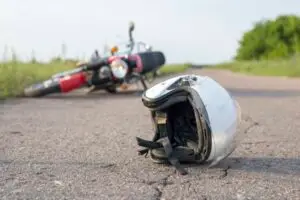
California Vehicle Code § 21703 requires every driver to maintain a following distance that is reasonable and prudent given the speed, traffic, and road conditions. That rule applies regardless of whether the vehicle ahead is a car, truck, or motorcycle.
A rear impact establishes that the following vehicle did not stop before contact. The fault question is why. Was the driver distracted? Was the gap too small for the speed? Did traffic slow and the driver failed to react?
The statute does not create automatic liability in every rear-end crash. But it establishes a clear standard, and the physical evidence helps determine whether the following driver met it.
What Does the Evidence Show About Following Distance?
The location of damage on the motorcycle and the car tells part of the story. A direct rear impact at speed looks different from a low-speed bump in stop-and-go traffic. The height and angle of the damage, the motorcycle’s final resting position, and marks on the roadway all help reconstruct how closely the car was following.
Dashcam footage, traffic-camera video, and witness accounts fill in the rest. When the following driver claims they had plenty of room, the physical evidence either supports that version or contradicts it.
What if the Rider Slowed or Stopped Before the Collision?
Adjusters handling rear-end motorcycle claims sometimes argue that the rider slowed too quickly or stopped without warning. California Vehicle Code § 22109 addresses this by stating that a driver cannot suddenly stop or decrease speed without signaling when there is an opportunity to give that signal.
The phrase “when there is opportunity to give the signal” matters because the circumstances surrounding the slowdown are part of the analysis. A rider might need to brake because a vehicle turned across the lane, a pedestrian entered the roadway, or traffic suddenly slowed. The reason for the stop matters when fault is disputed.
The investigation compares the rider’s reason for slowing against the following driver’s gap and reaction. A driver following at a safe distance has room to respond to a normal stop. A driver tailgating a motorcycle does not, and § 21703’s following-distance requirement applies to that gap.
How Do Chain-Reaction Rear-End Crashes Affect a Motorcycle Claim?
 A chain-reaction collision creates a specific problem: a rider struck from behind may be pushed into the vehicle ahead, leaving damage on both the front and rear of the motorcycle. That damage pattern makes it look as though the rider caused two collisions when one impact actually initiated the entire sequence.
Establishing which collision happened first is the central question. If the car struck the motorcycle before the motorcycle contacted the vehicle ahead, the following driver’s impact started the chain.
Evidence that helps resolve the sequence includes:
- Multi-vehicle damage patterns showing which surfaces made contact first
- The location and direction of impact marks on the motorcycle’s front and rear
- Witness accounts describing the order of impacts
- Video capturing the collision sequence
- Final resting positions of each vehicle relative to lane markings
When the evidence confirms that the initial rear impact pushed the motorcycle forward, that evidence helps establish whether the rear impact also caused the secondary collision.
What Evidence Shows How a Rear-End Motorcycle Collision Happened?
Every rear-end motorcycle claim hinges on a handful of factual questions: how close was the following driver, why did the motorcycle slow or stop, and what happened in the seconds before contact? The evidence that answers those questions varies by crash, but certain categories come up repeatedly.
|
Rear-End Scenario |
Main Dispute |
Evidence That Helps Resolve It |
|
Motorcycle stopped and struck from behind |
Did the following driver leave enough stopping distance? |
Video, witnesses, damage, vehicle position |
|
Motorcycle slowed with traffic |
Was the slowdown visible and was there enough following distance? |
Dashcam, traffic conditions, brake-light evidence |
|
Rider accused of sudden braking |
Why did the rider slow and what warning was available? |
Video, witnesses, traffic sequence, brake-light evidence |
|
Motorcycle pushed into another vehicle |
Which impact happened first? |
Multi-vehicle damage patterns, video, witnesses |
|
Motorcycle struck the rear of another vehicle |
Did one or both drivers contribute? |
Brake lights, following distance, vehicle movement, video |
Where Does M&Y Start the Investigation?
M&Y reviews the crash report, obtains available video and photographs, identifies witnesses, and examines the physical damage on every vehicle involved. The firm compares vehicle damage patterns with each driver’s account to test whether the versions match the evidence.
When brake-light condition is disputed, M&Y works to preserve or inspect the motorcycle before repairs alter the relevant components. When a chain-reaction sequence is at issue, multi-vehicle damage analysis helps establish impact order.
Call 866-864-5477 to discuss the evidence in your rear-end motorcycle collision.
Where Do Rear-End Motorcycle Crashes Happen in Los Angeles?
 Los Angeles freeway congestion creates recurring rear-end risks as motorcycles and passenger vehicles move through dense traffic and frequent speed changes. A motorcycle stopped behind congestion on I-405 or slowing as traffic backs up on I-10 is exposed to every driver behind it.
Surface streets present a different pattern. A rider stopped at a red light on Wilshire Boulevard or waiting to turn at a busy intersection has limited ability to move out of the way if a distracted driver fails to stop in time.
How Long Do You Have to File a California Motorcycle Rear-End Claim?
California Code of Civil Procedure § 335.1 generally gives an injured person two years from the date of injury to file a personal injury lawsuit. Different rules and shorter procedural deadlines apply in some situations, including claims involving a government entity.
Why Choose M&Y for a Rear-End Motorcycle Claim?
Rear-end motorcycle claims involve factual distinctions that determine how the entire case is evaluated. Following distance, brake-light condition, and the order of impacts in a chain-reaction crash all affect how fault is assessed and how the insurer values the claim.
Some M&Y attorneys previously worked for insurance companies and understand how adjusters dissect braking, visibility, and following-distance evidence in motorcycle rear-end disputes. That background informs how the firm builds the evidence file and responds to fault arguments.
M&Y has recovered over $1 billion for California injury victims and brings more than 100 years of combined experience to every case. Every client works directly with an attorney, and M&Y has earned national recognition and more than 1,400 five-star reviews.
Our Los Angeles motorcycle accident lawyers handle rear-end claims alongside lane-change, left-turn, and other serious motorcycle collisions across Southern California. M&Y operates on a contingency fee, so you pay no attorney fees unless we recover compensation.
Contact us or call 866-864-5477 for a free case review.
What Does It Take to Get Started?
 M&Y Personal Injury Lawyers builds rear-end motorcycle claims around the details that decide these disputes: following distance, braking, impact sequence, and documented injuries. The firm has recovered over $1 billion for California accident victims, and you pay no attorney fees unless we recover compensation.
Contact M&Y Personal Injury Lawyers or call 866-864-5477 for a free consultation. We are available 24/7.