Key Takeaways:
- California Vehicle Code Section 260 defines a commercial vehicle as one used to transport people for hire or profit, or designed and used primarily to transport property.
- Federal law under 49 CFR 383.5 sorts commercial motor vehicles into three groups based on weight, passenger capacity, and hazardous cargo.
- Vehicles weighing 26,001 pounds or more, vehicles built to carry 16 or more people, and vehicles hauling placarded hazardous materials generally require a commercial driver’s license.
- Commercial drivers and their employers must follow rules that do not apply to a non-commercial vehicle, including hours of service limits, lower speed limits, and strict maintenance schedules.
- The commercial vehicle classification usually means larger insurance policies and potential employer responsibility after a truck crash.
What Is the Commercial Vehicle Definition in California?
The commercial vehicle definition in California comes from Vehicle Code Section 260, which covers any motor vehicle used or maintained to transport people for hire, compensation, or profit, or designed and used primarily to move property. In plain terms, if the vehicle exists to make money by carrying passengers or cargo, California treats it as commercial. That includes obvious examples like semi-trucks and charter buses, along with less obvious ones like florist delivery vans and airport shuttles.
The statute also carves out what does not count. A passenger car you drive to work, a vanpool vehicle, and most house cars (motorhomes) stay outside the definition because they are not built or used primarily to haul goods or paying passengers. The line is about purpose and design, not size alone.
California’s definition catches one group that surprises people: pickup trucks. The state registers most pickups as commercial vehicles because of their property-hauling design, even when the owner only uses the truck for weekend trips to Home Depot. Registration as commercial, however, does not automatically bring the heavy regulations that apply to trucking companies.
How Does Federal Law Define a Commercial Motor Vehicle?
Federal law uses weight, passenger capacity, and cargo type to decide which vehicles qualify, and the main rule appears in 49 CFR 383.5. That regulation splits commercial motor vehicles into three groups for licensing purposes. Each group carries its own testing and endorsement requirements for drivers.
Here is how the three federal groups break down:
- Group A: Combination vehicles with a gross combination weight rating of 26,001 pounds or more, where the towed unit weighs more than 10,000 pounds. Tractor-trailers and semi-trucks fit here.
- Group B: Heavy straight vehicles with a gross vehicle weight rating of 26,001 pounds or more, such as dump trucks, large box trucks, and many buses.
- Group C: Smaller vehicles that do not meet Group A or B thresholds but are designed to carry 16 or more people, including the driver, or haul hazardous materials that require placards.
A separate federal rule, 49 CFR 390.5, applies safety regulations to interstate vehicles weighing as little as 10,001 pounds. That lower threshold means many medium-sized work trucks must follow federal safety rules even though their drivers do not need a commercial license.
Common Types of Commercial Vehicles on California Roads
 Commercial vehicles are everywhere in California, from the container trucks on the 710 Freeway to the tour buses climbing the Grapevine on Interstate 5. Some of the most common types include:
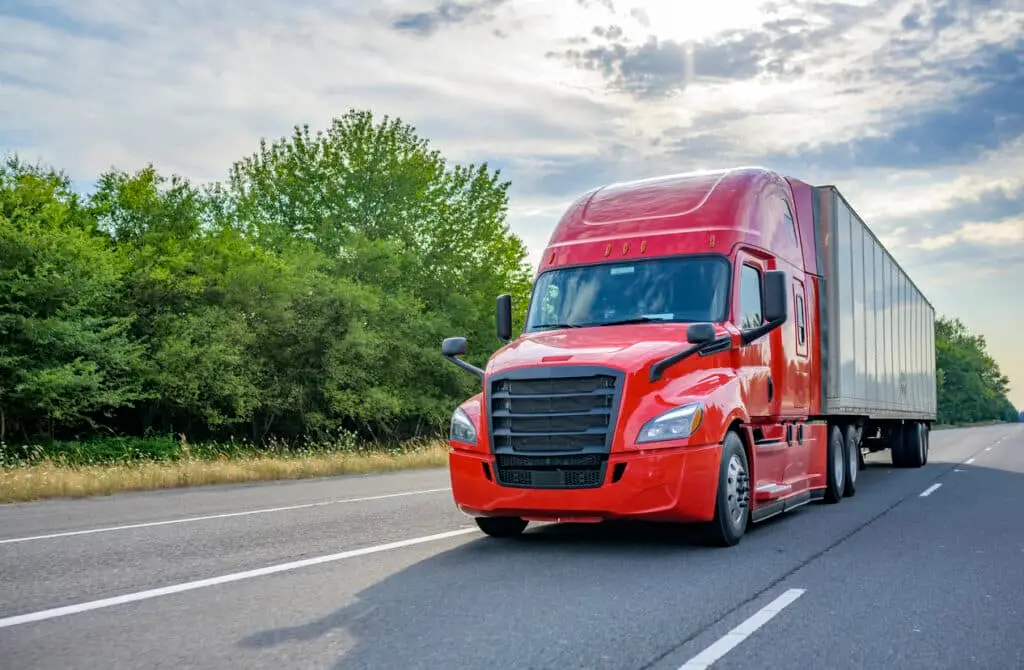
- Semi-trucks and tractor-trailers hauling freight between ports, warehouses, and distribution centers
- Delivery trucks and cargo vans operated by parcel carriers, retailers, and local businesses
- Buses, including transit buses, school buses, charter coaches, and airport shuttles
- Tow trucks, dump trucks, cement mixers, and other construction or service vehicles
- Taxis, limousines, and other vehicles that carry passengers for a fare
- Tanker trucks and any vehicle transporting placarded hazardous materials
Each of these vehicles shares one trait: it moves people or property as part of a business. That shared purpose is what pulls such different machines under the same legal umbrella.
Commercial Vehicle vs. Non-Commercial Vehicle: What Sets Them Apart
The difference between a commercial and a non-commercial vehicle comes down to purpose, regulation, and responsibility.
Purpose
A non-commercial vehicle, like the family sedan or SUV, exists for personal transportation, and its driver only needs a standard Class C license. A commercial vehicle operates as part of a business, so the law layers extra duties on both the driver and the company behind the wheel.
Regulation
Those extra duties show up in several ways. Commercial operators face medical certification requirements, drug and alcohol testing programs, and detailed inspection records that no private driver has to keep. Their vehicles are also held to published maintenance standards, with paper trails that can later reveal exactly how well a company cared for its fleet.
Responsibility
Insurance is the other major dividing line. A personal auto policy in California can carry relatively low liability limits, while federal rules require many interstate carriers to hold at least $750,000 in liability coverage, and hazmat haulers must carry more. Those larger policies reflect the greater damage a loaded truck can cause in a collision.
What Rules Do Commercial Vehicle Drivers Have to Follow?
Commercial vehicle drivers follow a stricter rulebook than everyday motorists, and the rules exist because a fully loaded truck can weigh 20 times more than a passenger car. Key requirements include:
- Lower speed limits: Under California Vehicle Code Section 22406, trucks with three or more axles and any vehicle towing a trailer cannot exceed 55 mph on state highways.
- Hours of service limits: Federal Motor Carrier Safety Administration rules cap how long a driver can stay behind the wheel, generally 11 hours of driving within a 14-hour workday, followed by 10 consecutive hours off duty.
- Lane restrictions: On many California freeways with four or more lanes, trucks must stay in the two right-hand lanes.
- Licensing and training: The California DMV requires written exams, skills tests, and medical certification before issuing a commercial driver’s license, plus endorsements for passengers, tankers, and hazardous loads.
- Cargo securement and weight limits: Loads must be balanced, secured, and within legal weight limits to prevent shifting cargo and rollovers.
- Maintenance and inspections: Drivers must complete pre-trip inspections, and carriers must document repairs to brakes, tires, lights, and coupling systems.
When a company or driver cuts corners on any of these rules, the risk of a serious crash climbs. Those same rules later became the measuring stick for whether the trucking company acted responsibly.
Why the Commercial Vehicle Definition Matters After an Accident
The classification changes who can be held responsible and how much insurance is available after a crash. When an on-duty driver causes a collision, California law generally holds the employer responsible for the driver’s negligence under a doctrine called respondeat superior, which simply means the company answers for the work its employees perform. That opens the door to the company’s commercial insurance policy rather than a small personal one.
Evidence
Commercial cases also come with more evidence. Trucking companies must preserve driver logs, electronic control module data, inspection reports, and dispatch records, none of which exist in an ordinary fender bender between two private cars. That paper trail can show a fatigued driver, a skipped brake repair, or an overloaded trailer.
Higher Stakes
The stakes are higher, too. Because commercial vehicles are so heavy, collisions often cause life-changing injuries, and these truck accident claims typically involve more parties, more documentation, and a longer resolution timeline. Knowing whether the vehicle that hit you qualifies as commercial in a commercial vehicle accident is often the first step in figuring out the true value of your claim.
How Commercial Vehicle Insurance Claims Differ From Car Accident Claims
The first difference you will notice is who shows up. In an ordinary car accident, one adjuster from one insurance company handles the file. When a commercial vehicle is involved, the carrier’s insurer often deploys a rapid response team, sometimes including defense attorneys and accident reconstruction consultants, within 24 hours of the crash.
The second difference is how many policies may be in play. A single tractor-trailer can involve separate coverage for the truck, the trailer, the cargo, and the motor carrier itself, and the driver may be an employee of one company while the trailer belongs to another. Sorting out which policy responds, and in what order, is a puzzle that simply does not exist in a two-car collision.
Self-insured commercial vehicle carriers pay claims directly instead of routing them through an insurance company. That changes the negotiation, because you are dealing directly with the company’s own claims team rather than a separate insurer. Claims against self-insured carriers tend to be documented more heavily on both sides.
Finally, expect a different timeline. Commercial claims rarely settle in the first few weeks because the injuries are usually more serious, and the liability picture takes longer to develop. The trade-off is that the available coverage is typically far larger, which makes patience and thorough documentation worth the wait.
What Should You Do After a Commercial Vehicle Accident in California?
Start with your health, then protect your claim, because evidence in commercial vehicle cases can disappear quickly. If you are able, take these steps:
- Seek medical care right away, even if your injuries seem minor at first, since the medical record becomes part of your claim.
- Photograph the vehicles, the company name, and the DOT number on the truck, the road conditions, and your injuries.
- Collect contact information for the driver, the driver’s employer, and any witnesses.
- Report the crash to your insurance company, but do not give a recorded statement to the trucking company’s insurer.
- Keep records of every medical bill, missed workday, and out-of-pocket expense.
- Talk to a truck accident lawyer before signing anything, since early truck accident settlement offers rarely reflect the full value of a serious injury.
Acting quickly matters because carriers are only required to keep some records, like driver logs, for a limited time. A lawyer can send a preservation letter that requires the company to hold onto that evidence.
The Trucking Company Started Working on Your Case the Day It Happened
 Carriers and their insurers begin gathering facts within hours of a collision, and every week that passes makes their version of events harder to challenge.
M&Y Personal Injury Lawyers has recovered more than $800 million since 2013, much of it from commercial carrier cases, and our first move is preserving the driver logs and black box data before they disappear. Results may vary. Prior case outcomes do not guarantee similar results.
A conversation with us costs nothing, and there is no fee unless we win your case.
Call M&Y Personal Injury Lawyers at 866-864-5477, any hour of the day or night, or send us the basics through our contact page, and one of our attorneys will follow up with you directly.